 You’re replacing a Humphrey visual field analyzer — or adding a second one — and the price gap between new and refurbished is somewhere between $20,000 and $40,000. Before you make that call, there are a few things about the HFA platform that are worth understanding, because the decision isn’t just about price.
Why the Humphrey HFA Is Still the Standard
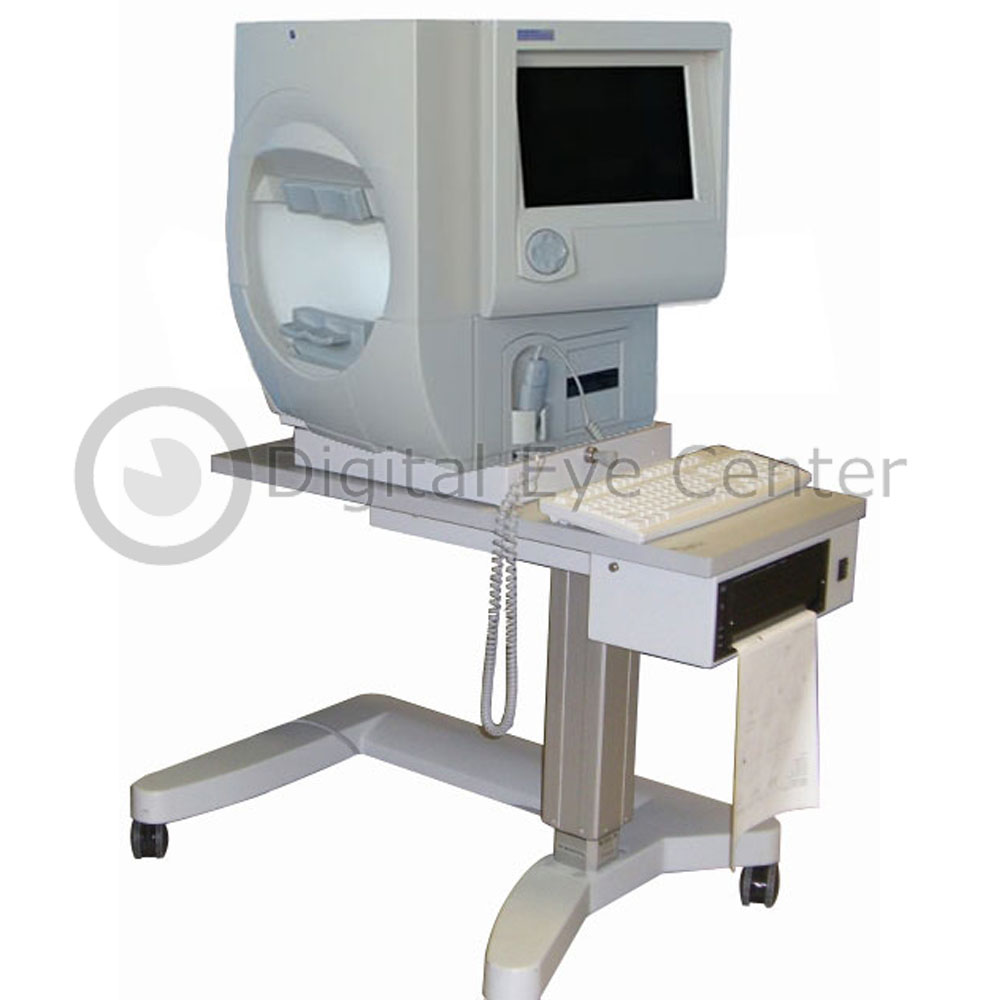
The Zeiss Humphrey Field Analyzer (HFA) has been the clinical benchmark for automated static perimetry for decades. The reason it’s still dominant is software, not hardware. The SITA (Swedish Interactive Threshold Algorithm) testing strategies — particularly SITA Standard and SITA Fast — are embedded in the HFA platform and produce results that clinicians, insurers, and researchers treat as a reference standard. If you’re managing a glaucoma population, your patients’ test histories are almost certainly in HFA format.
Switching platforms means losing comparability to prior fields. For most practices that decision alone ends the conversation. You need an HFA, and the question becomes which generation and how it’s sourced.
New vs. Refurbished: The Real Tradeoff
A new HFA 3 from Zeiss starts above $20,000 and can run well past $30,000 with support contracts. The previous generation — the HFA II-i series (740i, 745i, 750i) — is available refurbished in the $7,000–$9,000 range. The core question is whether the software capabilities you actually use require the new platform.
What the HFA 3 adds that prior generations don’t
The HFA 3 introduced SITA Faster, a second-generation algorithm that cuts test time by roughly 50% versus SITA Fast with comparable reliability data. It also added 24-2C, a pattern that includes central test points to catch early central loss that standard 24-2 misses. If your practice runs high volumes of early-stage glaucoma patients or you want the newest normative databases, the HFA 3 makes sense.
Where refurbished HFA II-i units hold up
For monitoring established glaucoma patients, a refurbished HFA 750i or 740i running SITA Standard and SITA Fast delivers the same test patterns and the same patient database continuity you already have. If a patient has 10 years of 24-2 fields on an HFA II-i, continuing on the same platform is an advantage, not a compromise. The optical and mechanical components of the HFA II-i are robust, and a properly refurbished unit will run reliably for another decade with normal maintenance.
The Software Connectivity Question
This is where many buyers get surprised. The HFA II-i series shipped in three connectivity configurations that affect what you can do with it now:
Floppy-only units (e.g., HFA 740i Floppy)
These export fields via 3.5″ floppy disk and have no built-in network export or USB. You can add a third-party floppy emulator to get data off the machine, but this is a workaround. If your EMR requires direct digital import or you’re printing a lot of fields, verify that your preferred workflow solution supports this unit before buying.
Factory USB units (e.g., HFA 745i Factory USB)
These came from Zeiss with a factory-installed USB port and can export directly to a USB drive. Compatible with HFA DICOM modules and most ophthalmic EMR integrations. This is the sweet spot for most refurbished HFA buyers.
Generic USB units
Aftermarket USB upgrades added to floppy units. Functionally similar to factory USB for most purposes, but verify EMR compatibility — some practice management systems check the hardware ID and reject generic upgrades.
The right connectivity tier depends entirely on how your practice exports and stores VF data. Ask your EMR vendor specifically: “Does your system support HFA DICOM export from a [floppy / factory USB / generic USB] unit?” Get the answer in writing.
What to Verify Before Buying a Refurbished HFA
A refurbished HFA II-i that’s been properly inspected and calibrated is a reliable instrument. One that’s been wiped and relisted without service is a risk. Ask these questions before committing:
- What specifically was inspected and what was replaced? (CRT/flatscreen display, printer mechanism, stimulus projector, bowl coating)
- Was optical alignment verified after any service?
- What software version is it running — and is that version compatible with your EMR’s DICOM module?
- Is the printer included and functional? (Replacement thermal printers for older HFAs are increasingly scarce)
- What warranty is included — and does it cover the bowl and optical components, not just power supply?
What’s Currently in Stock at Digital Eye Center
We currently have several refurbished Humphrey HFA II-i units available, including the 740i, 745i, and 750i in floppy, factory USB, and generic USB configurations. Browse our full inventory here: Visual Fields Analyzers.
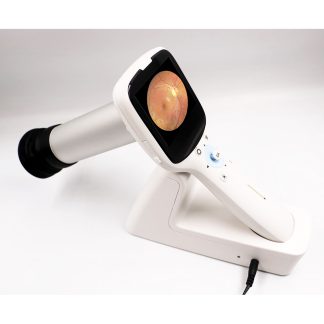
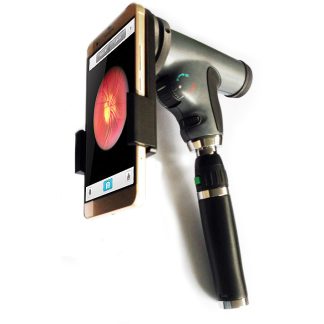
If you’re building a screening or diabetic retinopathy program alongside your visual field capacity, you might also look at our Vision Screener Digital Eye for pediatric and primary care screening, or our fundus cameras for retinal documentation alongside VF testing.
Every refurbished HFA we sell has been inspected by a certified ophthalmic equipment technician before shipping and comes with a warranty. We can tell you exactly what was serviced, what software version it’s running, and whether it’s been tested with your specific EMR integration.
Call us at 305-771-4562 and tell us your patient volume, EMR system, and whether you need floppy compatibility or USB export — we’ll match you to the right unit. Or contact us here.