
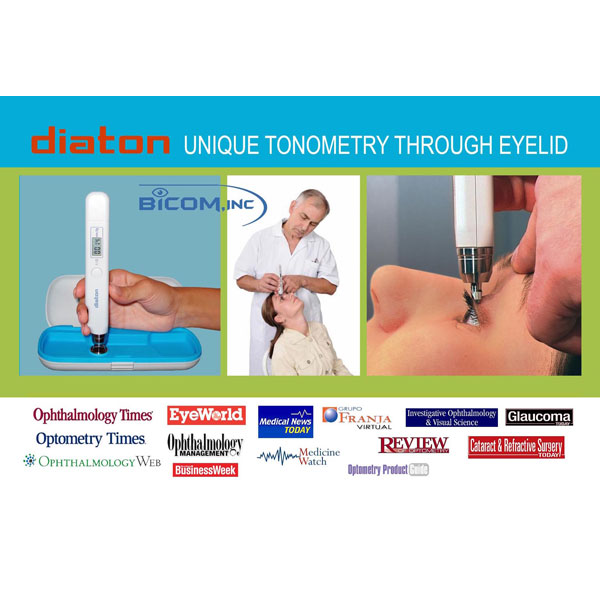
Description
What’s Included
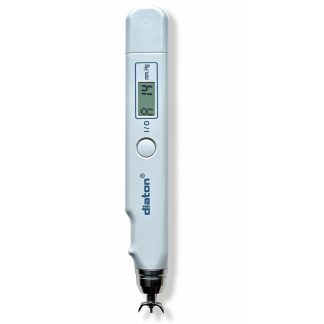
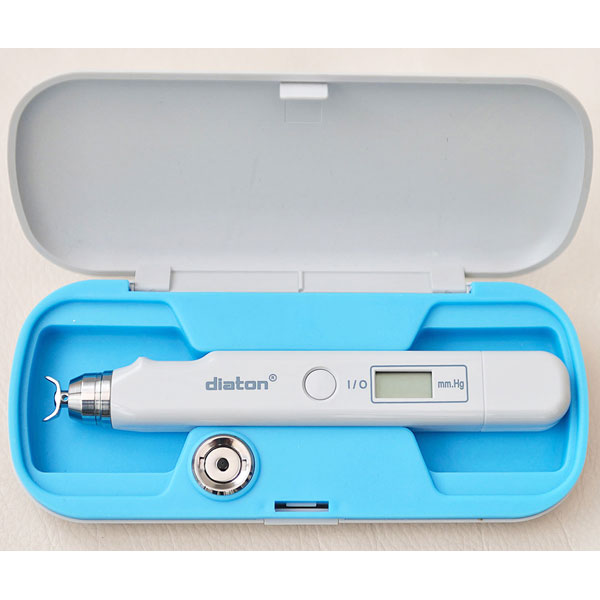
- Diaton tonometer (handheld, pen-sized)
- Carrying case with test device for in-office calibration checks
- 3V CR2032 battery (about 1,500 measurements per battery)
- User manual and quick start guide
- Training brochure plus complimentary Zoom training session (English)
- 2-year manufacturer warranty
Condition & Warranty
Brand new. The Diaton tonometer ships factory-sealed. Covered by a 2-year manufacturer warranty on parts and workmanship — handled directly through Digital Eye Center. Units are in stock at our Miami, FL facility and ship the same business day.
Diaton Tonometer — IOP Through the Eyelid, No Drops, No Corneal Contact
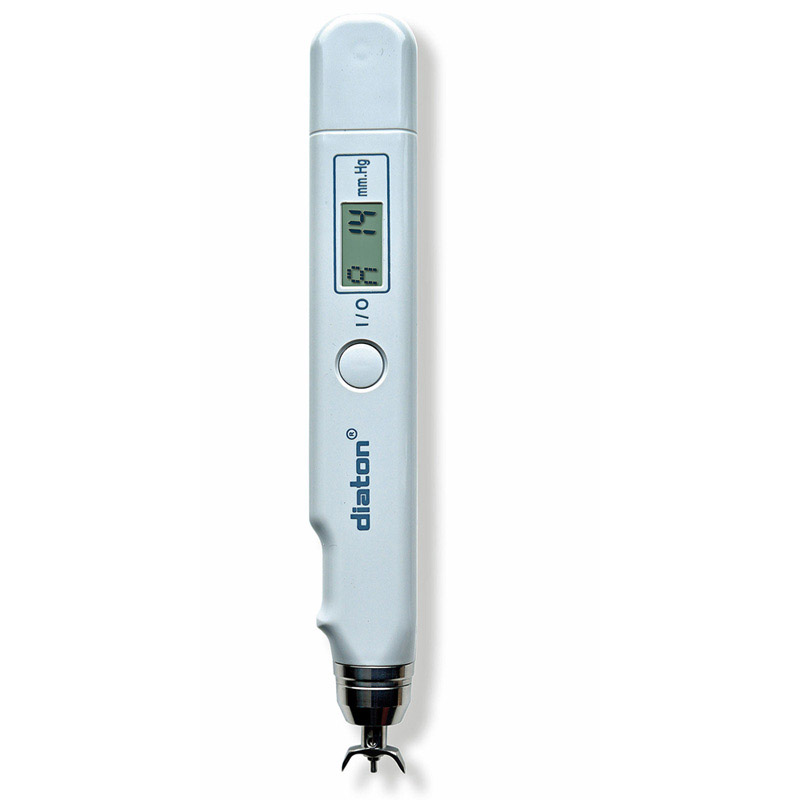 The Diaton tonometer is the only FDA-cleared handheld tonometer that measures intraocular pressure through the eyelid over the sclera — completely bypassing the cornea. No anesthetic drops, no fluorescein, no air puff, and no sterilization between patients: the Diaton tonometer requires nothing more than gentle eyelid placement to produce an IOP reading in seconds. This makes it the instrument of choice for post-surgical eyes, corneal pathology, pediatric patients, bedside monitoring, and any clinical setting where standard corneal tonometry is impractical or contraindicated. The Diaton tonometer is available brand new, factory-sealed, with a 2-year manufacturer warranty.
Transpalpebral IOP measurement with the Diaton has been evaluated in peer-reviewed research published by the National Library of Medicine, confirming its clinical role as a non-contact scleral tonometry method for patients where corneal applanation or air-puff tonometry is not feasible — including post-keratoplasty, keratoprosthesis, and active corneal pathology cases.
Why Practices Choose the Diaton Tonometer
 Zero corneal contact — safe for the most vulnerable eyes — the transpalpebral scleral measurement method makes the Diaton tonometer the only IOP instrument usable after LASIK, PRK, corneal transplant, keratoprosthesis, active corneal infections, erosions, or when a bandage contact lens is in place.
- No consumables — zero per-patient cost after purchase — no disposable tips, no anesthetic drops, no fluorescein strips; the Diaton tonometer is the only tonometer with no recurring supply cost in daily clinical use.
- Minimal patient cooperation — measures IOP on young children, sedated patients, elderly patients with poor fixation, and non-verbal patients; the patient simply looks down while the tip rests on the upper eyelid.
- Fully handheld — no slit lamp, no chin rest, no exam lane — measures IOP bedside, chairside, in nursing homes, in exam lanes without slit lamp access, and in field screening programs.
- Contact lenses remain in place — no lens removal, no fluorescein contamination of soft lenses, no disruption to extended-wear schedules.
- High-throughput screening — about 3 seconds per measurement with no setup time between patients; ideal for community screening programs, school health, and mobile deployments.
- FDA-cleared since 2006 — cleared for clinical IOP measurement; validated against Goldmann applanation tonometry in peer-reviewed literature for use in cases where corneal measurement is not possible.
See the Diaton Tonometer in Action
See the Diaton tonometer in this Digital Eye Center demo — transpalpebral IOP measured through the eyelid, without corneal contact or anesthesia.

Want a side-by-side? Watch the Diaton demo compared with Goldmann, Pascal, Tono-Pen, and air-puff tonometry on YouTube.
Clinical Applications
- Post-surgical IOP monitoring — specifically indicated for IOP monitoring after LASIK, PRK, SMILE, corneal transplant (PKP and DSAEK), cataract surgery with corneal complications, and tube shunt implantation where corneal tonometry produces unreliable or unsafe measurements.
- Corneal pathology and active infection — safe to use over the eyelid in the presence of corneal ulcers, active keratitis, severe edema, erosions, and bullous keratopathy where corneal contact is contraindicated.
- Pediatric IOP screening — children who cannot cooperate with a slit lamp or air-puff device will tolerate the Diaton tonometer’s through-the-eyelid measurement; no dilation, drops, or prolonged fixation required; pair with the Vision Screener Digital Eye for a complete pediatric eye assessment.
- Bedside and nursing home IOP monitoring — measures IOP on immobilized, supine, or bedridden patients in any position; no exam chair or chin rest required.
- Mobile screening and community health — no exam lane infrastructure needed; add a portable slit lamp and portable fundus camera for a complete mobile eye clinic capable of glaucoma screening in underserved settings.
- Contact lens patients — IOP measurement without removing lenses or disrupting extended wear; no fluorescein contamination of soft contact lens material.
Diaton Tonometer in the Emergency Department and Hospital
- Eye trauma and ER triage — measure IOP through the eyelid in suspected acute angle-closure glaucoma, blunt trauma, or corneal abrasion without pressing on an injured cornea.
- Infection prevention — the tip touches only the eyelid skin, never the tear film or mucous membrane; wipe with an alcohol pad between patients. No disposable tip covers to stock.
- Any patient position — sitting, supine, or bedridden; useful on inpatient floors, ICU, and nursing homes where a slit lamp or air-puff tonometer cannot be brought to the patient.
Scleral Lens, Keratoconus, and Post-LASIK Patients
Corneal tonometers such as Goldmann, Tono-Pen, and air-puff devices are influenced by corneal thickness, curvature, scarring, and prior refractive surgery. Because the Diaton eyelid tonometer measures over the sclera, it is used for keratoconus, keratoprosthesis (KPro), post-LASIK / PRK eyes, and for monitoring IOP in scleral lens wearers without removing the lens. In a comparative study from APEC / UNAM in Mexico (77 eyes with glaucoma or glaucoma suspicion), as reported by the manufacturer, the Diaton averaged 0.69 mmHg from Goldmann applanation, versus 4.45 mmHg for a dynamic contour tonometer.
What Clinicians Say About the Diaton
Dr. Mark Latina, glaucoma specialist (Harvard / Mass. Eye and Ear) and inventor of SLT, found in his comparison study against Goldmann applanation that the Diaton works, and uses it in his glaucoma referral practice to confirm Goldmann readings in complicated patients.
Dr. Emil Chynn, cornea and refractive specialist, relies on it when Goldmann readings are unreliable — after LASIK, with corneal edema or scarring, keratoconus, keratoprosthesis, or a corneal transplant — because the reading does not depend on the cornea.
Dr. Henry Perry, cornea specialist, describes transpalpebral tonometry as an accurate IOP method that is independent of the cornea’s biomechanical properties, suitable for glaucoma patients including those with altered or diseased corneas.
Who This Is For
- Corneal and anterior segment specialists — the only practical IOP measurement tool for post-keratoplasty, keratoprosthesis, and active corneal disease patients where corneal applanation is impossible or unreliable.
- Glaucoma practices with high-risk surgical populations — tube shunt, trabeculectomy, and MIGS patients often have irregular corneal surfaces; the Diaton tonometer provides supplementary IOP data when Goldmann readings are compromised.
- Pediatric ophthalmology and pediatricians — the only tonometer requiring zero cooperation from the child; suitable for infants and toddlers who cannot be examined at a slit lamp.
- Primary care and family medicine — add glaucoma IOP screening to routine physicals with no ophthalmic training required; produces an objective numeric reading with minimal technique learning curve.
- Emergency departments and urgent care — fast IOP checks in eye trauma and suspected acute glaucoma without corneal contact or numbing drops.
- Nursing home, home health, and bedside providers — measure IOP on patients who cannot be transported to an exam chair; the pocket-sized handheld design suits any setting.
- Mobile screening programs and NGOs — lightweight, portable, and zero per-patient cost make the Diaton tonometer the most cost-effective IOP screening tool for high-volume community health deployments.
Technical Specifications
| Specification | Detail |
| Measurement Method | Transpalpebral scleral indentation (through the eyelid) |
| Contact Point | Upper eyelid over sclera — no corneal contact |
| Measurement Range | 5–60 mmHg |
| Measurement Accuracy | ±2 mmHg (IOP 5–20 mmHg) | ±10% (IOP 20–60 mmHg) |
| Measurement Time | 3 seconds or less per reading |
| Power | 3V CR2032 battery — about 1,500 measurements per battery |
| Weight | 89 g (3.1 oz) |
| Dimensions | 174 × 26 × 20 mm (6.9 × 1.0 × 0.8 in) |
| Service Life | 8 years minimum |
| Anesthetic Required | None |
| Consumables | None — no tips, covers, or drops |
| Patient Position | Any — sitting, supine, or recumbent |
| Minimum Patient Age | Infant (no minimum — no cooperation required) |
| Contact Lenses | May remain in place during measurement |
| Regulatory Status | FDA-cleared (2006) — CE marked — ISO 9001 / ISO 13485 |
| Form Factor | Handheld — no chin rest, slit lamp, or exam lane required |
| Condition | Brand New |
| Warranty | 2-year manufacturer warranty |
Diaton vs. Tono-Pen, Goldmann, and Air-Puff Tonometers
| Feature | Diaton | Tono-Pen | Goldmann | Air-Puff (NCT) |
| Touches the cornea | No | Yes | Yes | No (air pulse on cornea) |
| Anesthetic drops | No | Yes | Yes | No |
| Disposable covers or tip disinfection | No | Yes | Yes | No |
| Handheld / portable | Yes | Yes | No (slit lamp) | No (tabletop) |
| Works with patient lying down | Yes | Yes | No | No |
| Contact or scleral lenses can stay in | Yes | No | No | No |
| Reading affected by corneal thickness or LASIK | Minimal (measures over sclera) | Yes | Yes | Yes |
Compare Tonometer Options
The Diaton is the transpalpebral (through-the-eyelid) option in our tonometer line. For different measurement approaches:
| Device | Type | Corneal Contact | Condition / Price |
| Diaton Tonometer | Transpalpebral (scleral) | None | Brand new — $3,650 |
| Tono-Pen XL (Reichert) | Handheld applanation | Yes (drops required) | Refurbished — $2,895 |
| Topcon CT-80 | Non-contact (air puff) | None | Used — $1,980 |
| Reichert 7cr | Non-contact (air puff) | None | Used — $3,850 |
Diaton Tonometer FAQ
How much does the Diaton tonometer cost?
The Diaton tonometer is US$3,650, brand new with a 2-year manufacturer warranty. It is in stock at our Miami, FL facility and ships the same business day. Contact us for volume pricing or international shipping.
Can you measure eye pressure through the eyelid?
Yes. Transpalpebral tonometry measures intraocular pressure through the upper eyelid over the sclera. The Diaton is an FDA-cleared handheld eyelid tonometer that does this without drops, air puff, or corneal contact.
Is the Diaton a handheld IOP pen?
Yes. It is a pen-sized handheld IOP device (89 g) that fits in a coat pocket and goes from room to room, bedside, or into the field for glaucoma screening events and medical missions.
Is the Diaton a good Tono-Pen alternative?
For patients where corneal contact is a problem — post-LASIK, keratoconus, scleral lens wearers, corneal infections, children — yes. It needs no drops and no disposable covers. Many practices keep both: a Tono-Pen or Goldmann for routine exams and the Diaton for the cases corneal tonometry cannot handle.
Does it need tip covers or calibration service?
No disposable tips or covers are needed, and the included test device lets you check calibration in the office.
Is training included?
Yes. Every Diaton ships with a training brochure, and a complimentary Zoom training session (in English) is available after purchase.
Questions about the Diaton tonometer? Contact us for volume pricing, international shipping, or to discuss your clinical use case.