Posted on

Slit Lamp Adapter Buying Guide: Getting Usable Anterior Segment Photos

You want to document an anterior segment finding, and buying a dedicated imaging slit lamp is not in the budget this quarter. A slit lamp adapter is the cheap path to the same photo — but the wrong one gives you blurry, off-center images that never make it into the chart. Here is how to pick one that actually works.

Continue reading Slit Lamp Adapter Buying Guide: Getting Usable Anterior Segment Photos

Posted on

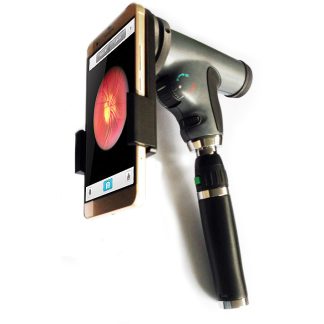
Smartphone Fundus Camera vs. Standalone: When an Adapter Is Enough

You want retinal images without buying a full fundus camera, and a smartphone fundus camera adapter looks like the shortcut. Sometimes it is. Just as often, it quietly costs you the documentation quality you were trying to capture. Here is how to tell which situation you are actually in before you spend anything.

Continue reading Smartphone Fundus Camera vs. Standalone: When an Adapter Is Enough

Posted on

Portable Slit Lamp Buying Guide: What Actually Matters Outside the Lane

You need a portable slit lamp because the patient cannot get to your lane — bedside rounds, a nursing home, a school screening day, or a satellite office that does not justify a full table setup. The trouble is that “portable” gets used for everything from a true one-hand handheld to a shrunken tabletop that merely fits in a case. Sorting that out first saves you from buying the wrong instrument.

Continue reading Portable Slit Lamp Buying Guide: What Actually Matters Outside the Lane

Posted on

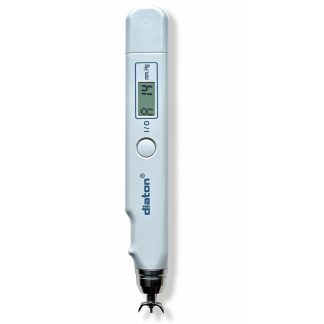
Tono-Pen XL Buying Guide: What to Check on a Refurbished Handheld Tonometer

You need a reliable IOP reading in a room without a slit lamp — a nursing home visit, a pediatric chair, a post-op check on a patient who can’t sit at the table. That’s the exact job the Tono-Pen XL was built for, and it’s why a refurbished one is one of the most cost-effective instruments you can add to a practice. The catch: not every “refurbished” handheld you’ll see listed has actually been serviced. Here’s how to tell before you pay.

Continue reading Tono-Pen XL Buying Guide: What to Check on a Refurbished Handheld Tonometer

Posted on

Corneal Topographer Buying Guide: What to Check Before You Buy

You’re pricing a corneal topographer and one vendor is quoting a Placido-disc unit while another insists you need Scheimpflug tomography for twice the money. The two aren’t interchangeable, and buying the wrong one means either overpaying for data you’ll never use or missing the posterior-surface detail your corneal cases actually need. Here’s how to decide.

Continue reading Corneal Topographer Buying Guide: What to Check Before You Buy

Posted on

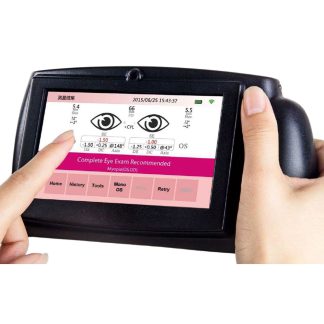
Auto Lensmeter Buying Guide: What a Small Practice Should Actually Check

You’re deciding whether an auto lensmeter is worth it for a small practice, or whether the manual unit on your bench is still good enough. The honest answer depends on your volume, your lens mix, and how much operator variability you’re willing to live with. Here’s how to think it through before you spend on a unit you’ll use every single day.

Continue reading Auto Lensmeter Buying Guide: What a Small Practice Should Actually Check
Posted on

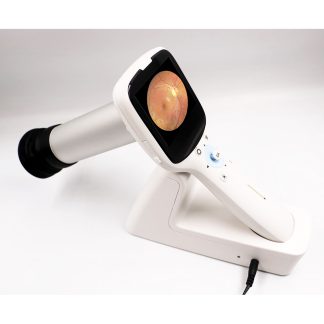
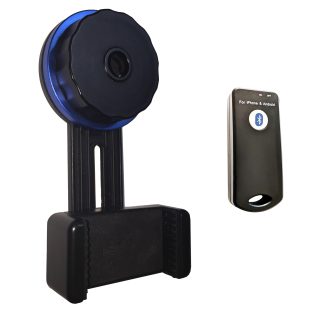
Portable vs. Tabletop Fundus Camera: Which Fits Your Screening Volume

You’re choosing a portable fundus camera or a tabletop system, and the spec sheets won’t tell you which one actually fits your day. The decision comes down to two things almost nobody puts on a quote: how many eyes you image per session, and whether the patient comes to the camera or the camera comes to the patient.

Continue reading Portable vs. Tabletop Fundus Camera: Which Fits Your Screening Volume

Posted on

Non-Contact Tonometer Buying Guide: What to Check Before You Buy

You want a fast IOP reading that a tech can take without anesthesia, and you’re deciding whether a non-contact tonometer belongs in your pre-test lane. The question isn’t whether the air-puff is “as good as Goldmann” — it’s where it fits in your workflow and which used unit is worth your money. Here’s how to sort it out.

Continue reading Non-Contact Tonometer Buying Guide: What to Check Before You Buy

Posted on

PanOptic Ophthalmoscope: Why a Smartphone Adapter Changes the Exam

You already use a PanOptic ophthalmoscope because the 25° field of view and 5× magnification do something a standard direct ophthalmoscope can’t — they let you see clinically useful retinal anatomy on an undilated patient in seconds. The question most clinicians get stuck on is what to do with that view once you see something worth documenting. You can’t hand the patient your eyepiece and you can’t dictate “0.4 cup-to-disc with a small drusen” into the chart and expect it to mean anything next visit. That’s where a smartphone adapter changes the entire exam.

Continue reading PanOptic Ophthalmoscope: Why a Smartphone Adapter Changes the Exam

Posted on

Zeiss Cirrus OCT vs. Heidelberg Spectralis: Which Refurbished OCT Is Right for Your Practice?

Zeiss Cirrus 5000A OCT refurbished — front view with AngioPlex workstation

Zeiss Cirrus 500 HD-OCT refurbished

You’re evaluating OCT platforms for your practice and two names keep coming up: Zeiss Cirrus and Heidelberg Spectralis. Both are spectral-domain OCT systems. Both produce high-resolution cross-sectional retinal images. But they were built around different clinical philosophies — and that distinction matters when you’re buying refurbished.

Continue reading Zeiss Cirrus OCT vs. Heidelberg Spectralis: Which Refurbished OCT Is Right for Your Practice?