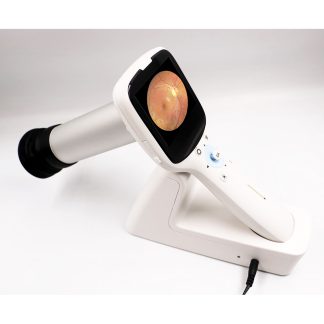
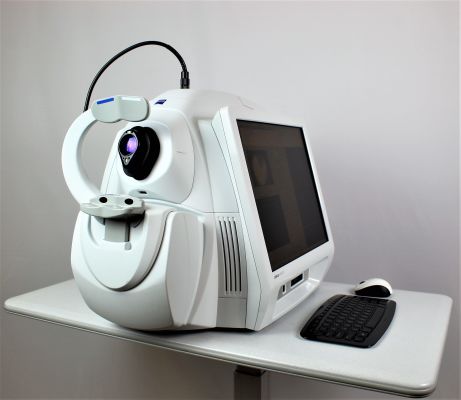
You’re evaluating OCT platforms for your practice and two names keep coming up: Zeiss Cirrus and Heidelberg Spectralis. Both are spectral-domain OCT systems. Both produce high-resolution cross-sectional retinal images. But they were built around different clinical philosophies — and that distinction matters when you’re buying refurbished.
The Core Difference in Design
The Zeiss Cirrus HD-OCT was designed around speed and workflow efficiency. Using an 840 nm superluminescent diode and axial resolution of 5 µm, the Cirrus 500 and 5000 models scan at up to 68,000 A-scans per second. That speed makes it practical for anterior and posterior segment imaging in a busy exam schedule. The platform also scales well — the Cirrus 5000 adds AngioPlex OCT-A for non-invasive angiography without dye injection, which has made it one of the most requested refurbished OCT platforms in general ophthalmology and retina.
The Heidelberg Spectralis took a different approach: prioritize reproducibility. Its TruTrack Active Eye Tracking system locks onto a retinal reference point and ensures follow-up scans land on exactly the same location — down to a single A-scan position. For longitudinal glaucoma monitoring or tracking subtle changes in retinal thickness over months, that level of reproducibility is clinically significant. Studies comparing the two platforms found the Spectralis had a lower coefficient of variation in test-retest thickness measurements. The trade-off is that the Spectralis workflow is more involved, and new Spectralis units carry significantly higher price tags.
How They Compare on Key Specs
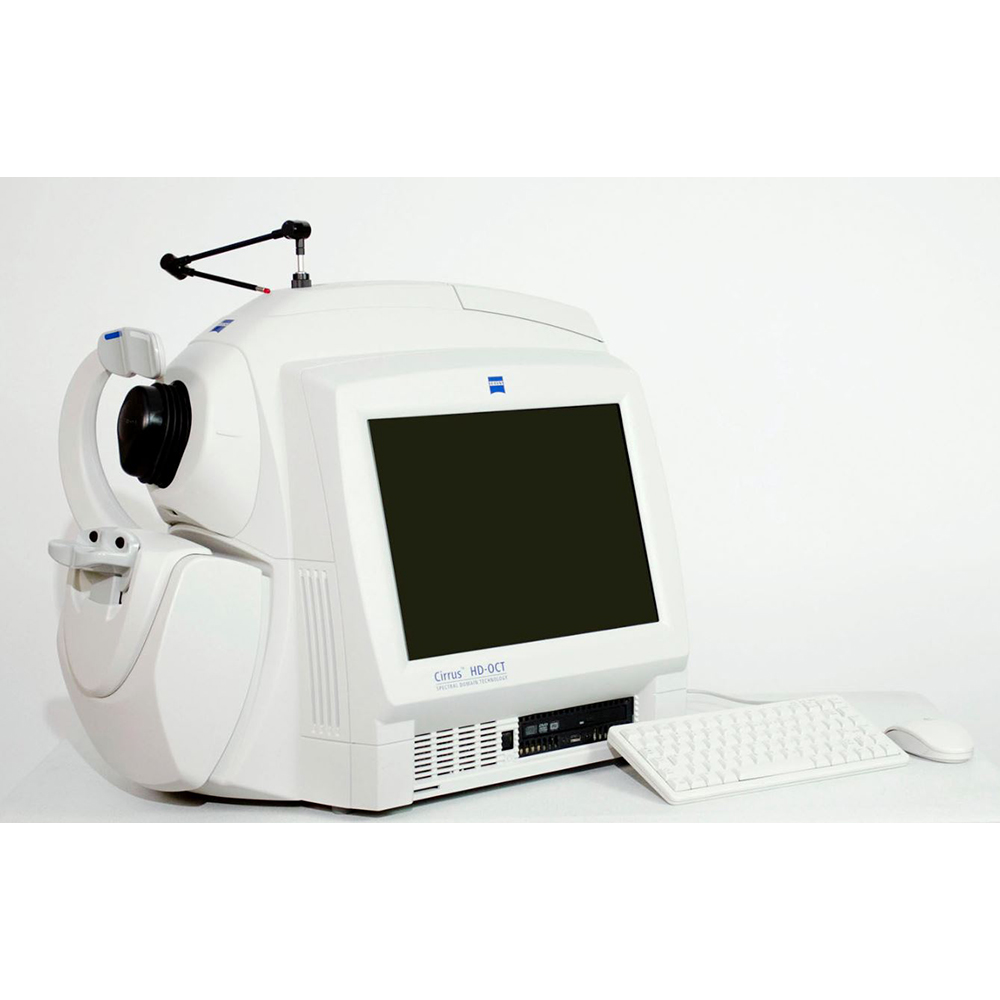
Scan speed: Cirrus 500/5000 top out at 68,000 A-scans/sec. The Spectralis runs at approximately 40,000 A-scans/sec but compensates with averaging — stacking multiple B-scans to reduce noise, which adds time but improves signal quality in challenging media.
Axial resolution: Cirrus delivers 5 µm in tissue. The Spectralis delivers approximately 7 µm — still clinically excellent, but measurably lower than Cirrus on this single metric.
Eye tracking: Spectralis has the advantage here, with hardware-based real-time tracking. Cirrus relies on software-based motion correction, which handles most patients well but falls short in direct comparison for exact follow-up positioning.
OCT Angiography: AngioPlex on the Cirrus 5000 makes the Cirrus platform more versatile for practices adding OCT-A capability. The Spectralis requires a separate OCT-A module, which adds cost and complexity.
Software and normative databases: Both platforms have large, validated normative databases. The Cirrus RNFL and ganglion cell analysis outputs are widely cited in glaucoma literature, and the Cirrus report format is familiar to most practitioners.
What This Means When Buying Refurbished
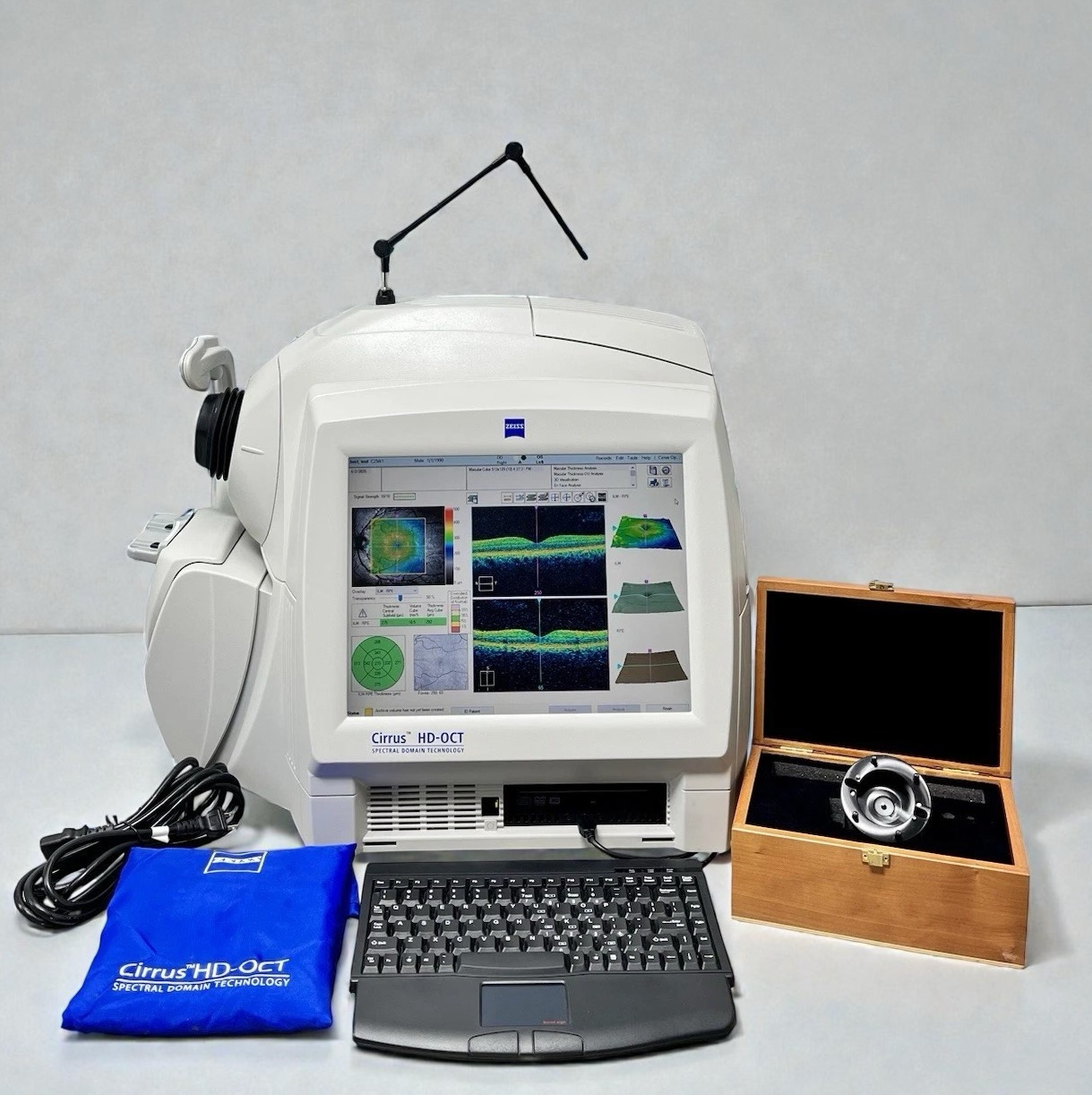
Refurbished Cirrus units are significantly more accessible than refurbished Spectralis systems. The Cirrus platform has been in broad clinical use since 2007 and the installed base is large, which means more units are available at any given time and parts support is stable. Refurbished Heidelberg Spectralis units appear on the market less frequently, and pricing reflects that scarcity.
For most general ophthalmology and combined retina-glaucoma practices, a refurbished Zeiss Cirrus 400 or Cirrus 500 delivers strong clinical performance at a fraction of the cost of a new system. For practices that have made OCT-A part of their standard workflow, the Cirrus 4000 and Cirrus 5000 are the better targets — AngioPlex is built in and the upgrade path is well-defined.
If precise longitudinal follow-up for glaucoma is your primary use case and you have the budget, a refurbished Spectralis is worth pursuing. But for most practices evaluating refurbished Cirrus OCT options, the platform delivers what the majority of clinical workflows require at a price point that makes sense.
Available Cirrus OCT Models at Digital Eye Center
Digital Eye Center carries the full Cirrus lineup — view all OCT models here. Each unit is inspected before shipment and sold with a standard 90-day warranty. Questions about configuration, Windows 10 compatibility, or connectivity to your EMR — contact us before you order.