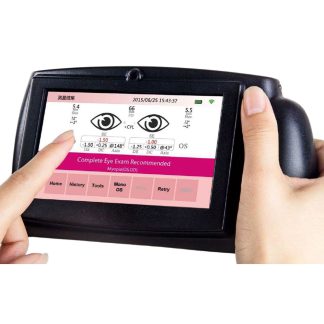
You’re trying to stand up a diabetic retinopathy screening program, and the math already worries you: a large share of your diabetic patients aren’t getting their annual retinal exam, and every missed screen is a preventable case of vision loss walking out the door. The equipment decision is where most programs stall. Here’s how to make it without overbuying.
Decide first: in-house imaging or referral?
Before you price a single camera, settle the model. If you’re an endocrinology or primary care group, the fastest path to volume is capturing retinal images on-site and routing them to a reading ophthalmologist — teleophthalmology — so patients get screened during a visit they were already attending. If you’re the eye practice on the receiving end, your decision is different: you need imaging that fits into a clinic already running full days, not a workflow that adds ten minutes per patient.
The American Diabetes Association supports remote screening with validated retinal imaging, and patients with type 2 diabetes should be screened at diagnosis and at least yearly after that. Whatever model you choose, the program lives or dies on whether the imaging step is fast enough that staff actually do it on every eligible patient.
The camera specs that actually matter
 Once you’ve cleared the model question, four specs separate a useful screening camera from one that sits in a closet.
Non-mydriatic capture — non-negotiable at volume
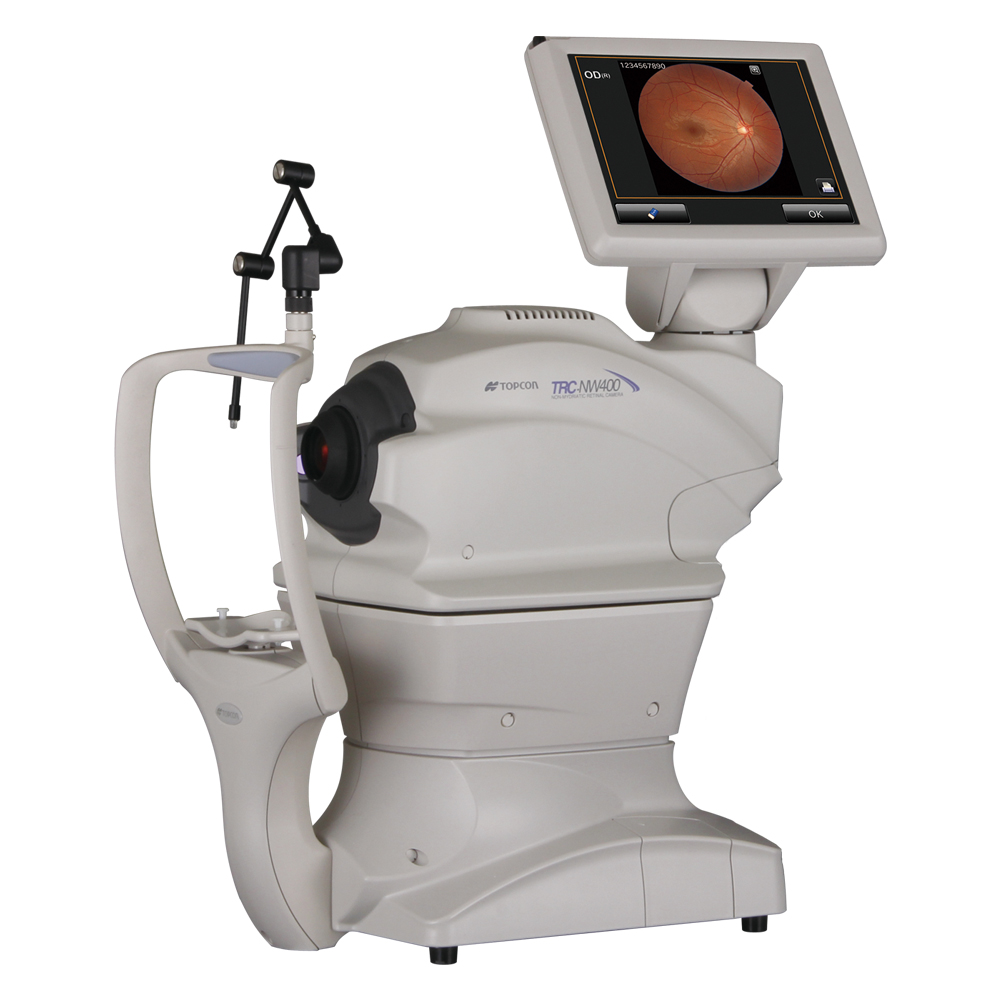
If you’re screening more than a handful of patients a day, dilation kills throughput. A non-mydriatic camera images through an undilated pupil, which means a medical assistant can capture both eyes in a couple of minutes without a drop-and-wait cycle. For a screening program, this is the single most important capability. Tabletop units like the Topcon NW-400 and Topcon NW8 are built specifically for this.
Field of view and resolution — enough to grade, not more
For diabetic retinopathy grading you need a clear view of the posterior pole and the major vascular arcades. A 45-degree field with sharp macula and disc detail is the workhorse standard. Chasing ultra-widefield is worth it for a retina specialist, but it’s overkill — and overpriced — for a screening line whose job is to triage who needs a dilated exam.
Portability — match it to where screening happens
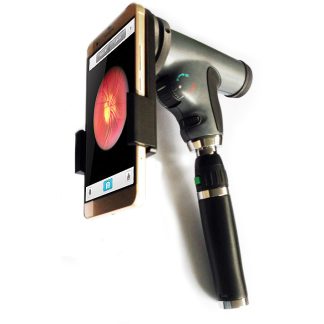
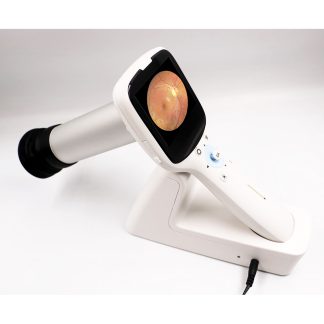
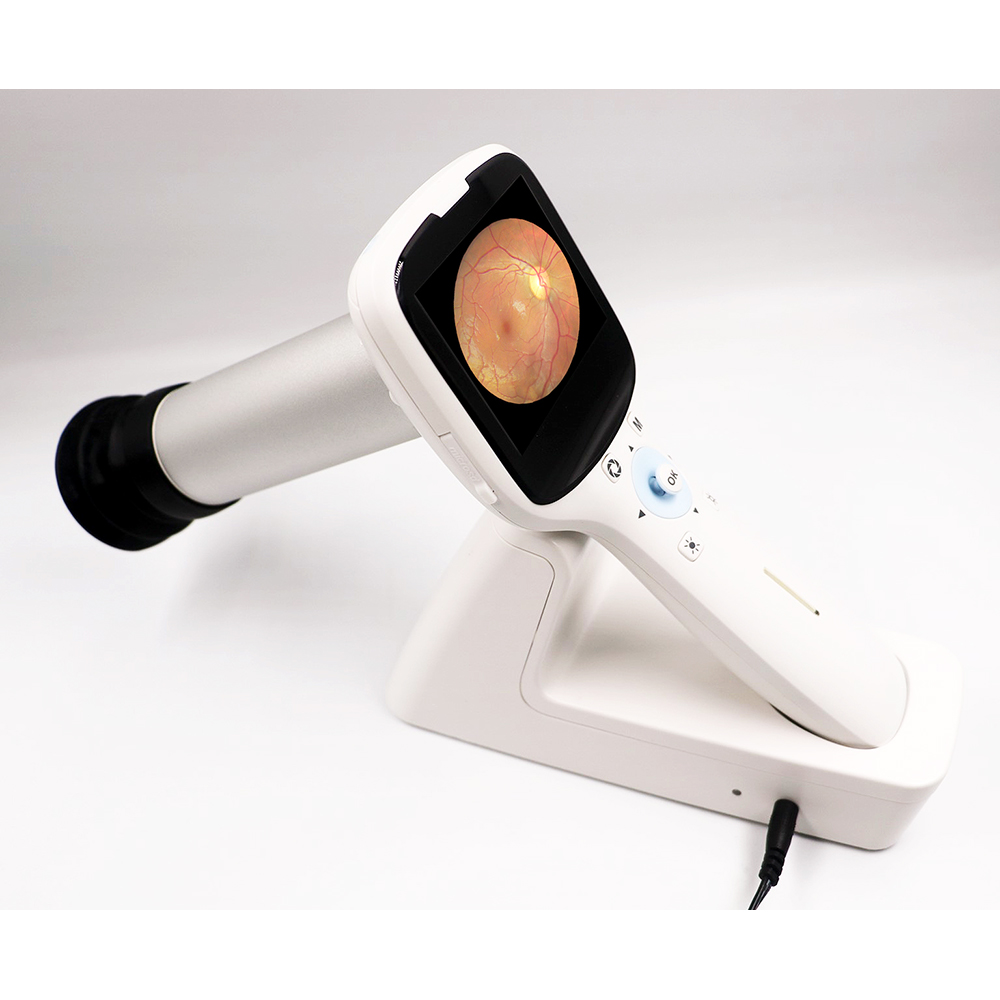
If screening happens at one fixed station, a tabletop unit is fine. If you’re running satellite sites, health fairs, or a mobile program, a handheld portable camera changes what’s possible. The FC-1000P and the higher-resolution Microclear Luna 16MP let you bring the screen to the patient instead of the other way around.
Connectivity — confirm it before you buy
The image has to reach the reader. Ask exactly how images export and whether the format and transfer method fit your EMR or your teleophthalmology reading platform. A camera that produces beautiful images you can’t move is a bottleneck, not a tool.
Build the workflow around your slowest day
 Equipment is half the program; the workflow is the other half. Decide who captures images — a trained medical assistant is standard — and write down the capture protocol so every patient is imaged the same way. Set the grading path: who reads, how fast results come back, and exactly how a patient who needs referral gets one. Programs that send recommendations back within 24 hours keep patients engaged; programs that take a week lose them.
Which setup fits your practice?
A solo optometrist adding screening to existing exams needs a reliable tabletop non-mydriatic camera and a clear referral relationship — nothing more. A primary care group running high diabetic volume needs fast capture, a teleophthalmology reader, and a documented same-visit results step. A mobile or multi-site program needs a portable camera and a plan for moving images off-site. Buy for the program you’re actually running, not the one you imagine.
Currently in stock for screening programs: the portable FC-1000P and Microclear Luna 16MP, plus the non-mydriatic Topcon NW-400 and Topcon NW8. You can also browse our full fundus camera inventory.
Every refurbished camera we sell is inspected and verified by a certified ophthalmic equipment technician before it ships, and every unit ships from Florida with a warranty.
Tell us how many patients you’re screening and where — fixed clinic, multiple sites, or mobile — and we’ll point you to the camera that fits the program. Contact us here or call 305-771-4562.