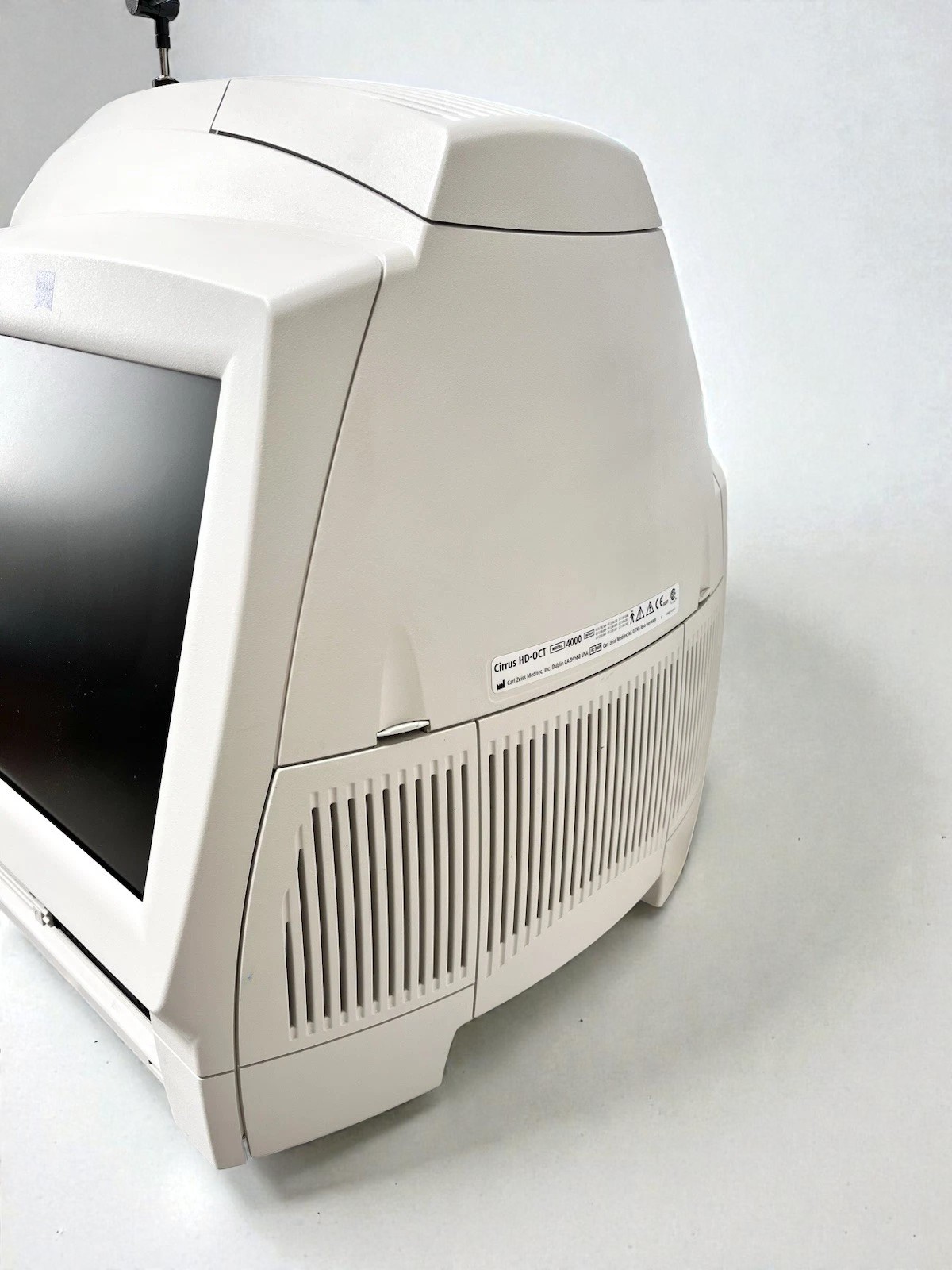
Description
This exact unit sold recently — but we specialize in sourcing refurbished ophthalmic equipment. Typical turnaround is 2–4 weeks once we confirm availability with our partners. Request a free quote with no deposit required.
Request Availability → Free quote · No obligation · 90-day warranty when shipped
Similar OCTs In Stock Now
Need a comparable oct available today? These units are in stock and ready to ship with a 90-day Digital Eye Center warranty.
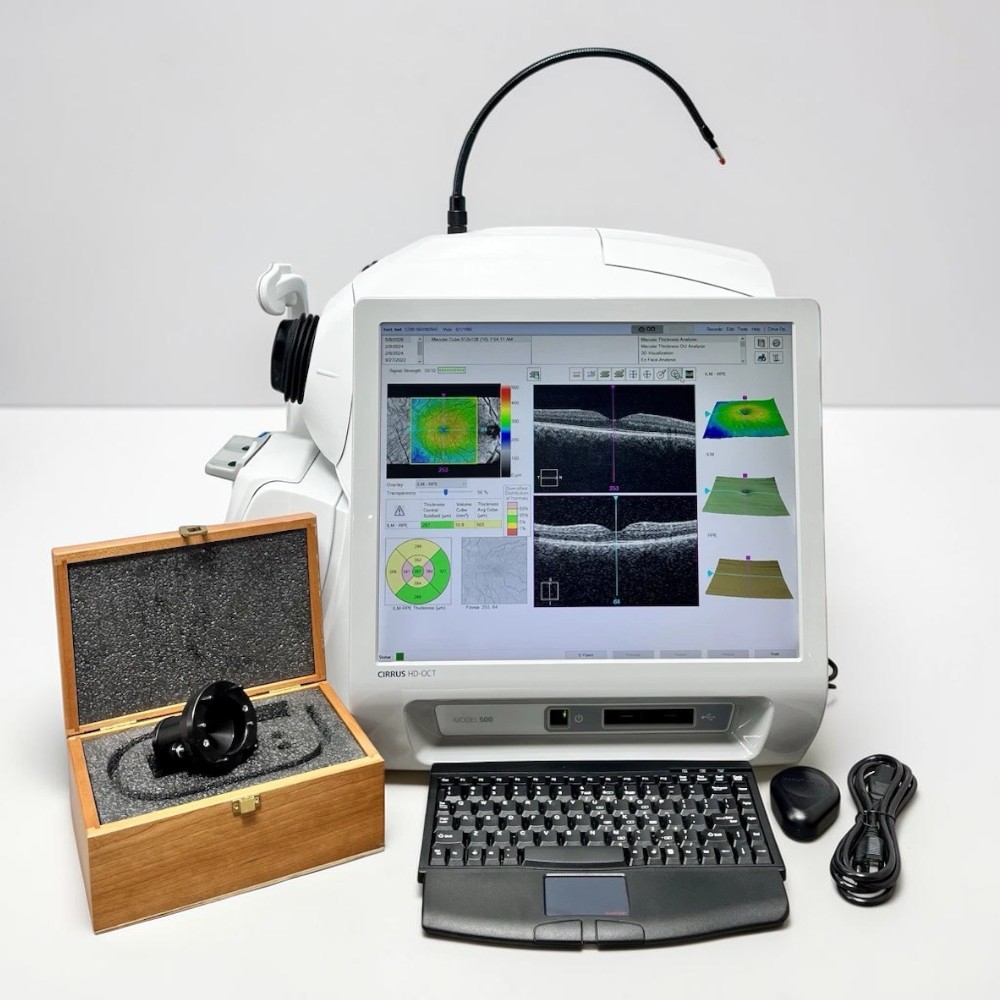
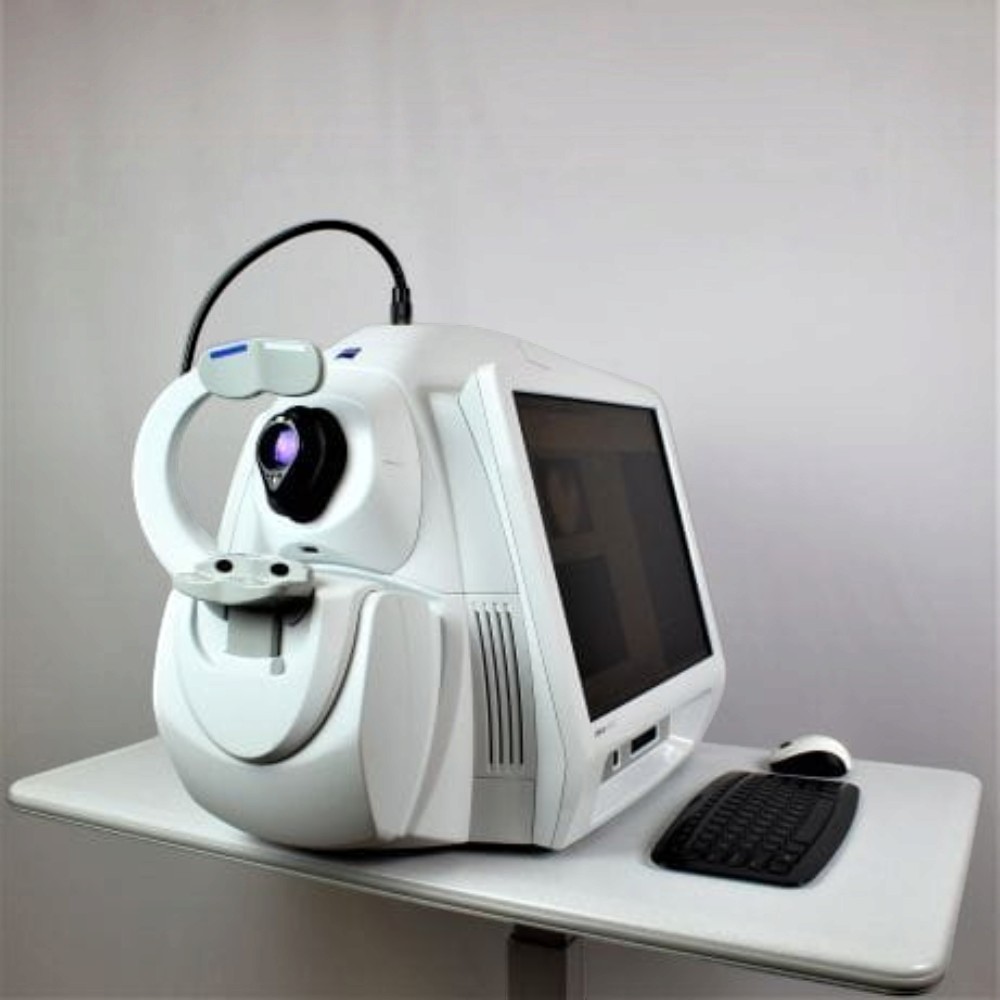
Prefer to wait for the Zeiss Cirrus 4000 OCT /Win10 – Used? Request availability and we’ll source one for you.
What’s Included
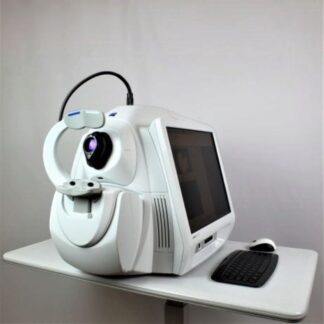
- Zeiss Cirrus 4000 OCT main unit (HD-OCT, Windows 10)
- Integrated workstation with Cirrus software
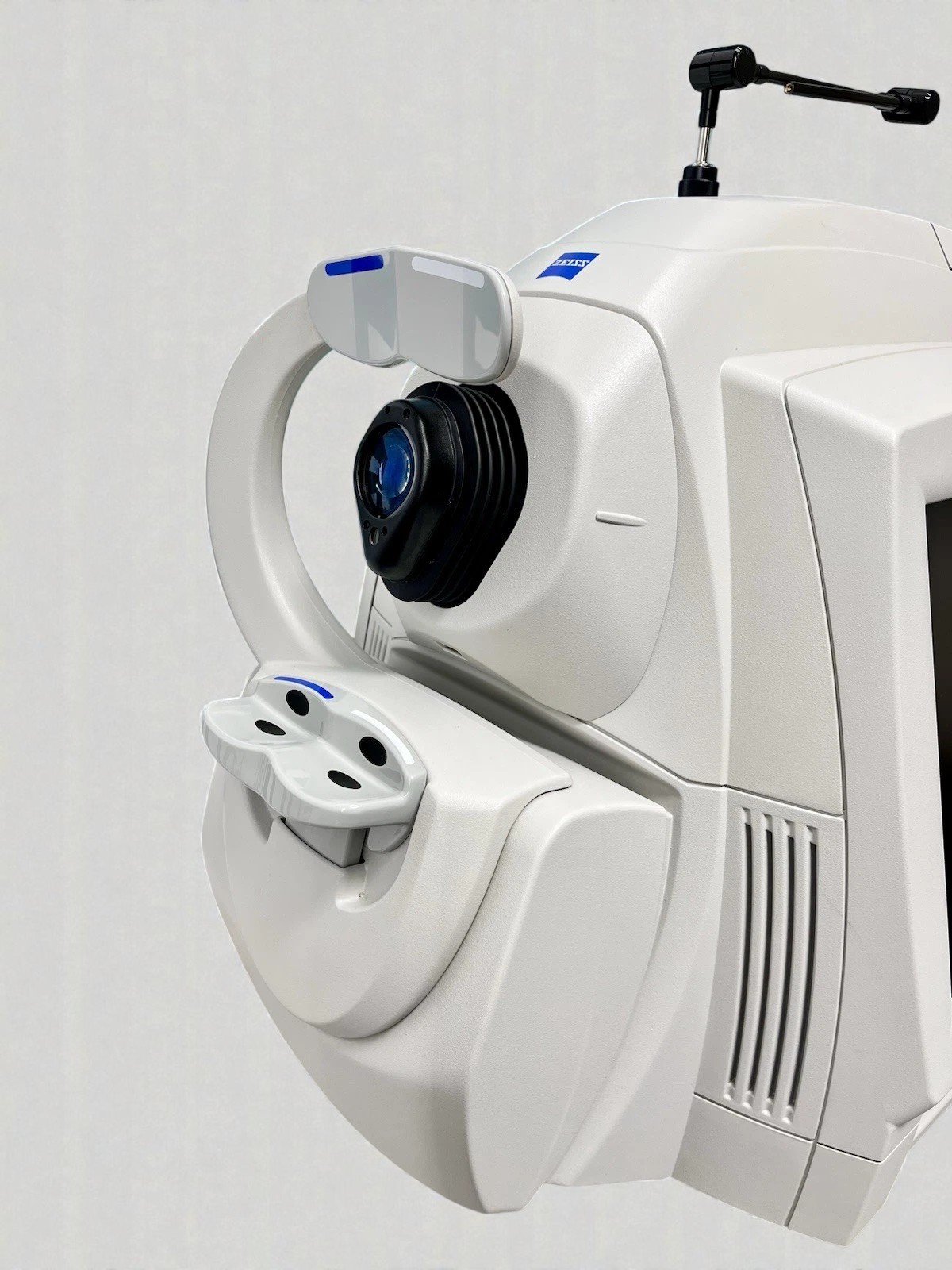
- Patient chin and forehead rest assembly
- Monitor and keyboard
- Test eye
- Dust cover
- Power cable
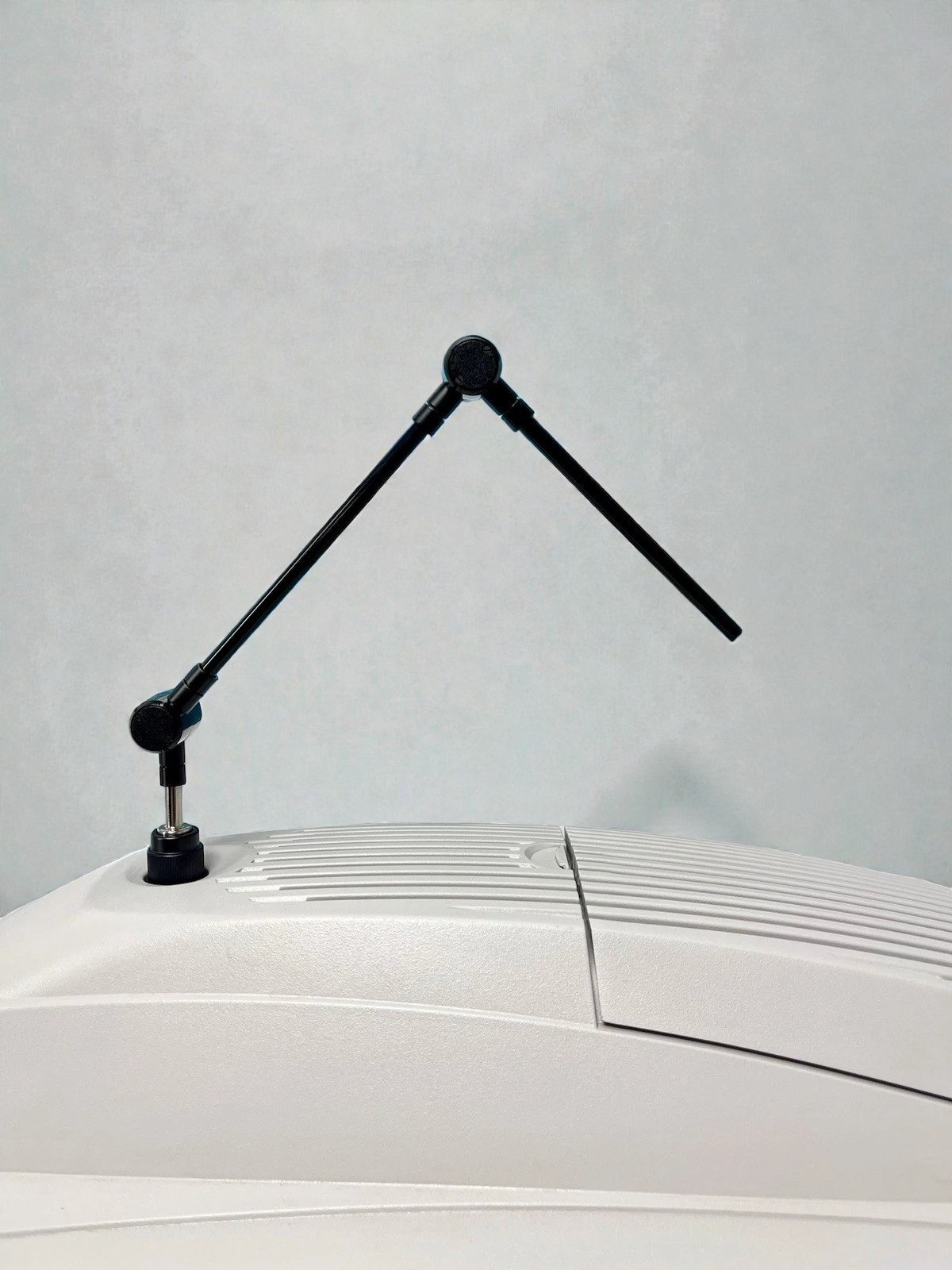
- Note: does not include lens cover; fixation light does not have lightbulb installed
- 90-day Digital Eye Center warranty
Condition & Warranty
Used. Tested and confirmed in excellent working order; shows some cosmetic wear consistent with used equipment. Carefully tested and cleaned before shipping. Note: does not include lens cover; fixation light does not have a lightbulb installed. Covered by a 90-day warranty on parts and workmanship.
Zeiss Cirrus 4000 OCT — Used SD-OCT with GPA and Windows 10
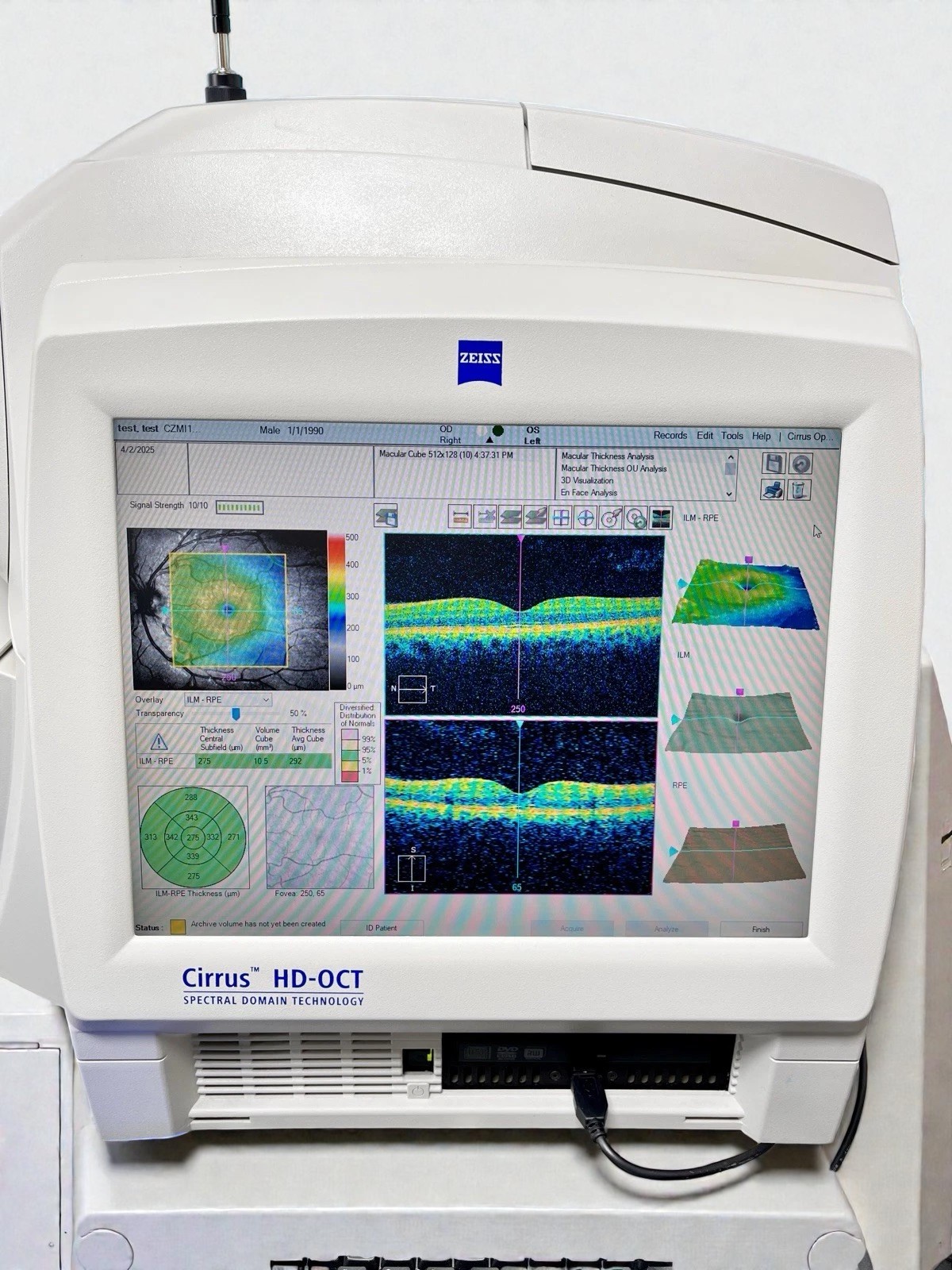
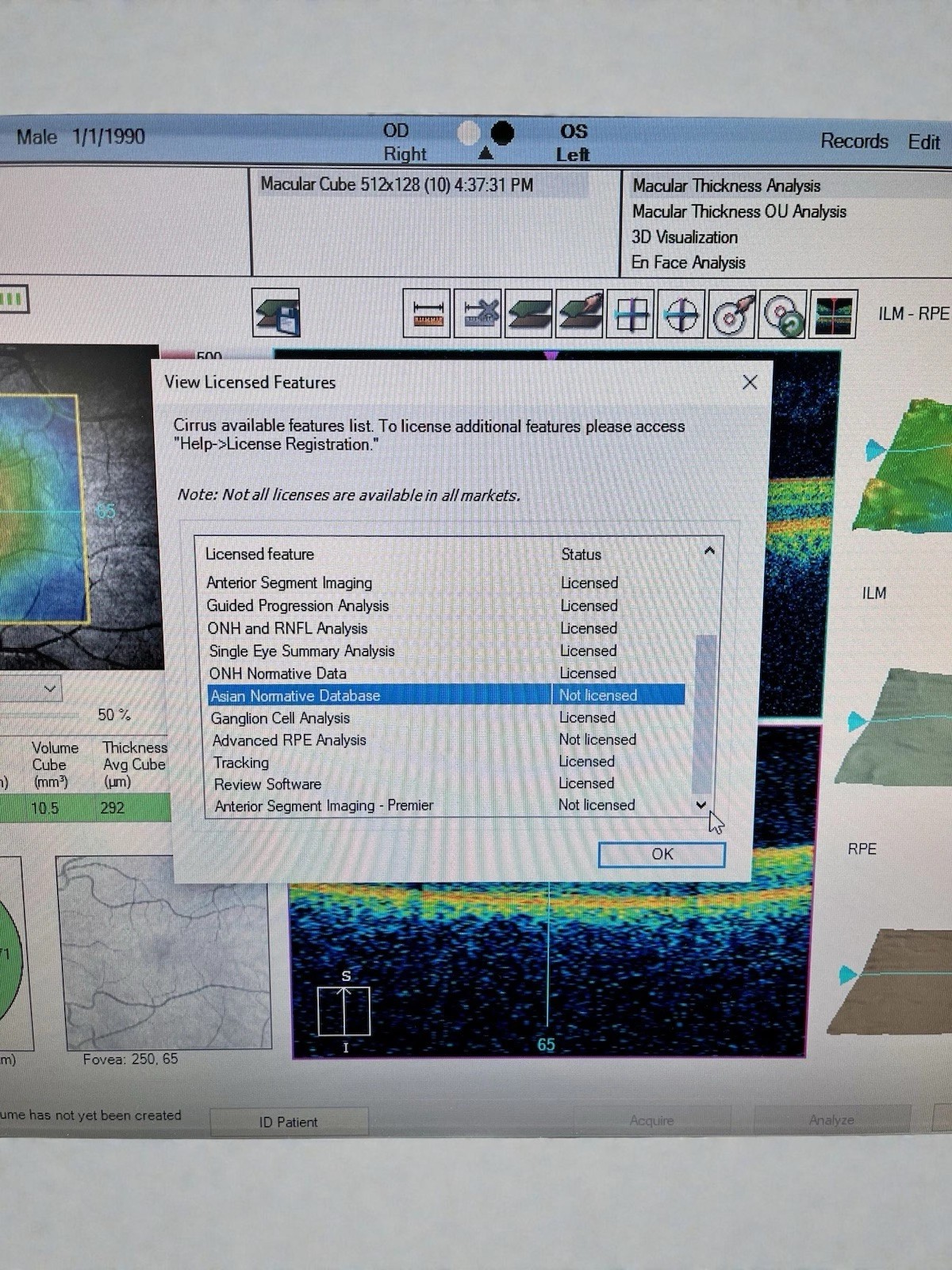
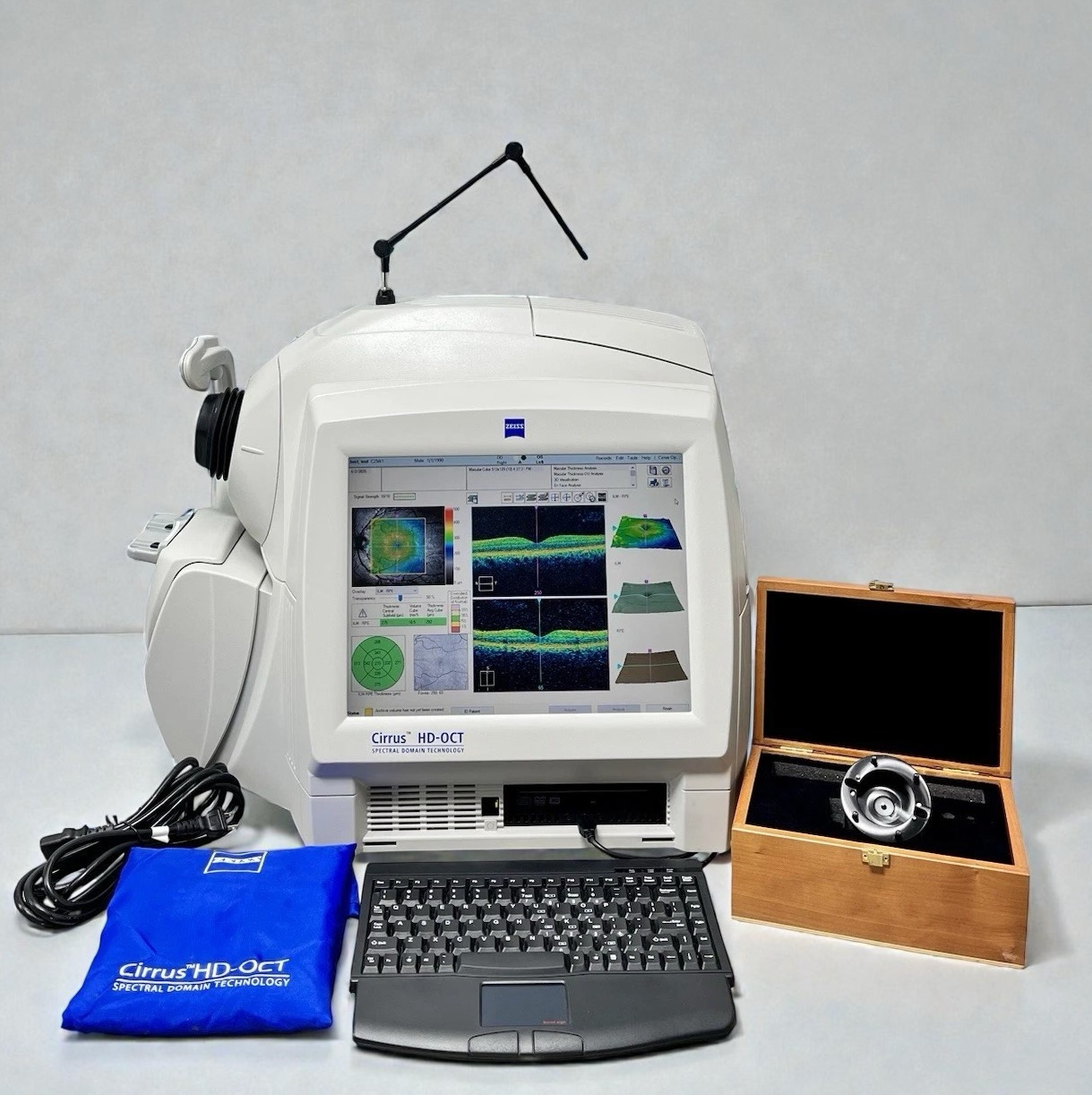 The Zeiss Cirrus 4000 HD-OCT is a proven spectral-domain OCT platform built on the same foundational Cirrus architecture trusted in glaucoma and retina practices worldwide. This used Zeiss Cirrus 4000 OCT runs at 27,000 A-scans per second and delivers the full Cirrus protocol suite — Macular Cube 512×128, Optic Disc Cube 200×200, and HD 5-Line Raster — with Guided Progression Analysis (GPA) for serial glaucoma monitoring. Updated to Windows 10, this unit offers an extended service lifespan and continued software compatibility at a significantly lower price point than the Cirrus 500 or 5000.
The National Library of Medicine confirms that retinal nerve fiber layer thickness measured by optical coherence tomography is a validated biomarker for differentiating glaucoma patients from disc suspects — establishing RNFL OCT analysis as the clinical standard for glaucoma documentation and the primary use case for the Zeiss Cirrus 4000.
Why Practices Choose the Zeiss Cirrus 4000
 27,000 A-scans per second — Spectral-domain acquisition speed delivers high-resolution macular and optic disc cubes with minimal motion artifact across the full Cirrus protocol suite.
- Guided Progression Analysis (GPA) — Detects statistically significant RNFL thinning between serial scans and generates summary progression reports; the documentation standard for glaucoma change detection in managed care.
- Macular Cube 512×128 — Dense macular sampling for accurate retinal thickness mapping, AMD drusen analysis, and diabetic macular edema monitoring.
- Optic Disc Cube 200×200 — Full optic nerve head quantification with rim area, cup-to-disc ratio, and RNFL thickness clock-hour map.
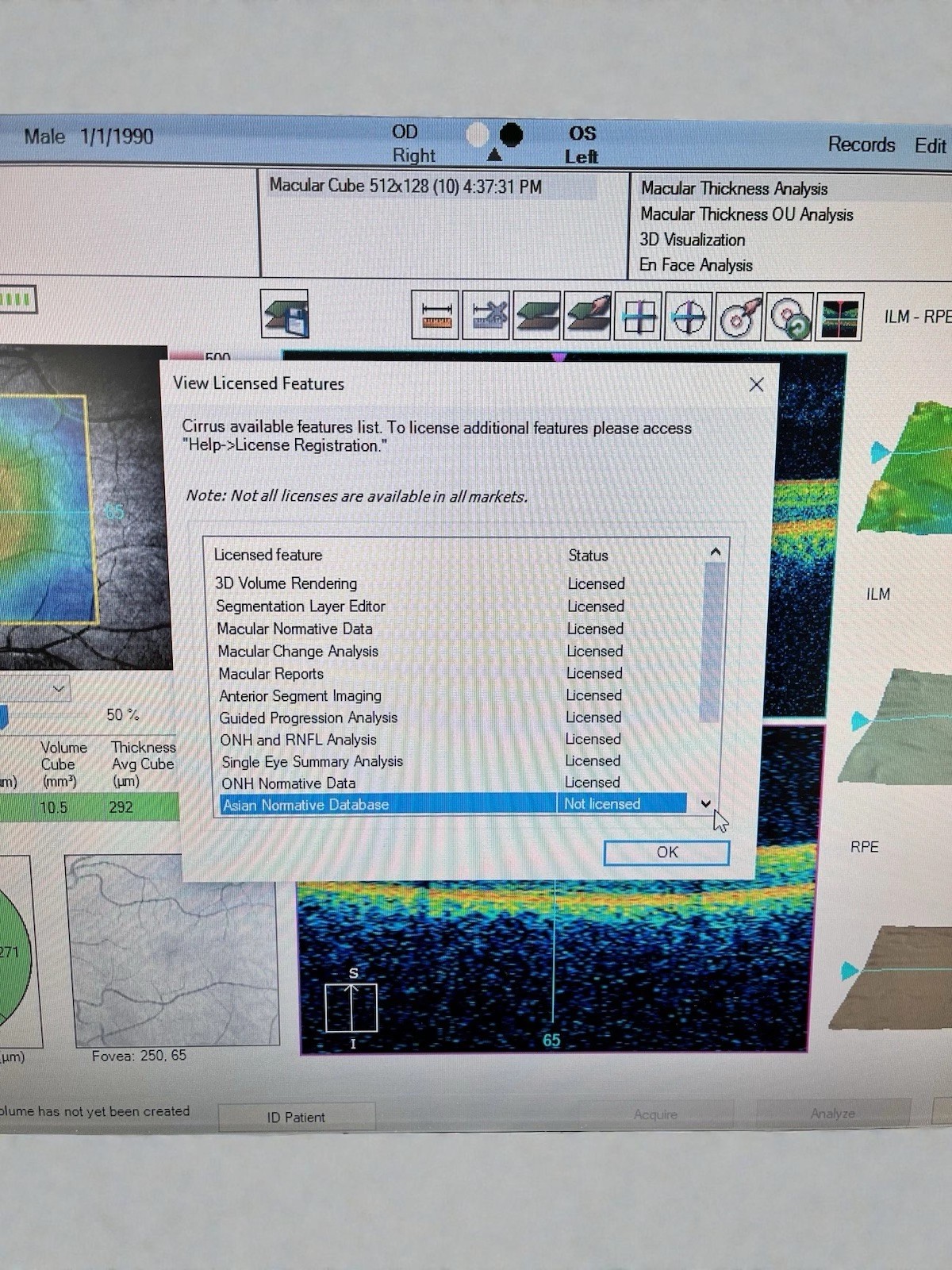
- Cirrus normative database — Age-stratified RNFL and macular thickness normative values from the most-referenced Cirrus dataset in published glaucoma literature.
- Windows 10 updated — Extended system life, continued software compatibility, and improved reliability versus older operating systems.
- Familiar Cirrus workflow — Identical software interface to the Cirrus 500 and 5000; staff move between instruments without retraining.
Clinical Applications
- Glaucoma monitoring and progression detection — GPA-powered serial RNFL analysis with statistical change flags; the standard workflow for managed care glaucoma documentation.
- Macular disease management — Retinal thickness maps for AMD, diabetic macular edema, epiretinal membrane, and vitreomacular traction.
- Optic nerve head analysis — Quantified rim area, C/D ratio, and RNFL deviation maps for glaucoma suspects and ocular hypertension patients.
- Retinal layer segmentation — Delineates individual retinal layers for neuro-ophthalmology including optic neuritis and MS-related RNFL thinning.
- Second-unit expansion — Adds high-volume OCT capacity at a used price, freeing the primary unit for complex or new patient imaging.
Who This Is For
- Ophthalmology practices with active glaucoma populations — GPA and the Cirrus normative database provide the documentation rigor required for co-management and specialist reporting.
- Optometry practices entering OCT imaging — The Cirrus platform and normative data are accepted across major co-management frameworks; the Cirrus 4000 is the most cost-effective entry into proven SD-OCT.
- Practices upgrading from time-domain OCT — A meaningful step up in resolution, scan speed, and analysis software from older Stratus OCT instruments.
- High-volume practices adding a second OCT lane — Identical software workflow to the Cirrus 500 and 5000 means zero retraining for existing staff.
- Budget-conscious buyers who want Cirrus reliability — Same Zeiss imaging optics and software architecture as the Cirrus 500/5000 at a fraction of the price.
Technical Specifications
| Spec | Detail |
| Manufacturer | Carl Zeiss Meditec |
| Model | Cirrus HD-OCT 4000 |
| Technology | Spectral-domain OCT (SD-OCT) |
| Scan speed | 27,000 A-scans/second |
| Wavelength | 840 nm |
| Axial resolution | 5 µm (tissue) |
| Scan width | 6 mm × 6 mm |
| Protocols | Macular Cube 512×128, Optic Disc Cube 200×200, HD 5-Line Raster |
| Analysis tools | GPA, RNFL thickness maps, optic disc parameters, macular thickness maps |
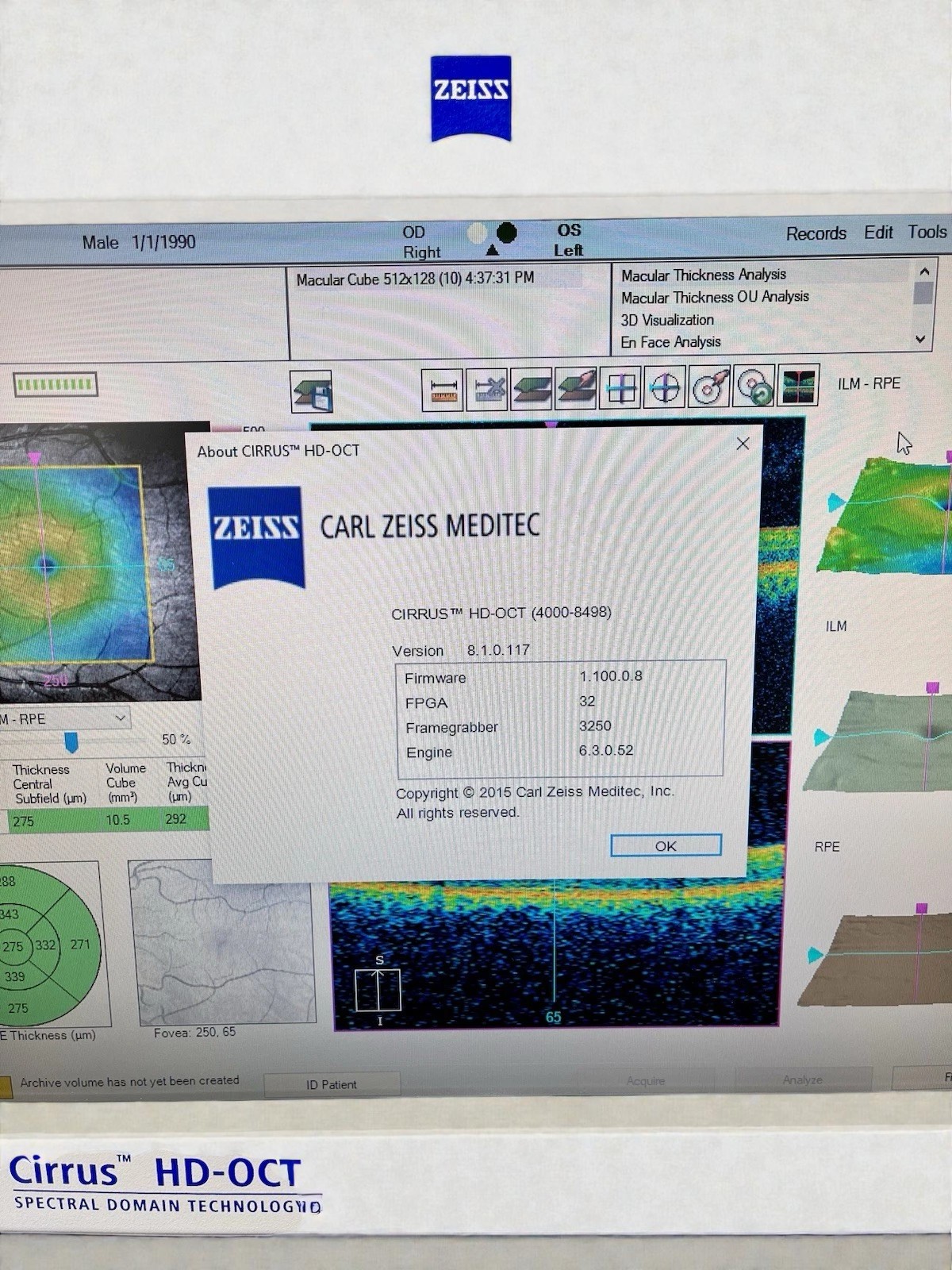
| Operating system | Windows 10 (updated) |
| OCTA | Not included |
| Condition | Used |
| Warranty | 90 days — parts and workmanship |
Compare Zeiss Cirrus HD-OCT Models
| Model | Speed | GPA | Condition | Price |
| Cirrus 5000 w/ AngioPlex | 68K A-scans/s | Yes | Used | $41,800 |
| Cirrus 5000 | 68K A-scans/s | Yes | Refurbished | $26,000 |
| Cirrus 500 | 27K A-scans/s | Yes | Refurbished | $22,325 |
| Cirrus 4000 (this unit) | 27K A-scans/s | Yes | Used | $15,400 |
| Cirrus 400 | 27K A-scans/s | Yes | Used | $11,000 |
Also consider the Optovue RTVue-100 OCT with Anterior Module — refurbished SD-OCT with anterior segment imaging at $12,500.
Questions about the Zeiss Cirrus 4000? Contact us — we will confirm the software version and provide sample scan images on request.