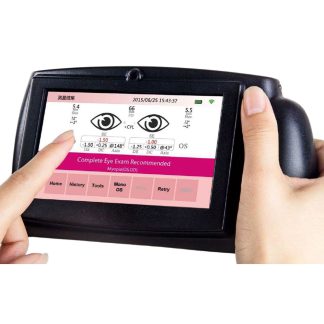
You’re building — or rebuilding — a mobile eye clinic, and the equipment list looks overwhelming. Every vendor wants to sell you a full suite of instruments. The reality is that effective mobile eye clinic equipment comes down to five core functions: refraction, IOP measurement, anterior segment exam, fundus evaluation, and screening. Everything else is optional depending on your patient population.
1. Refraction: Handheld Autorefractor or Vision Screener
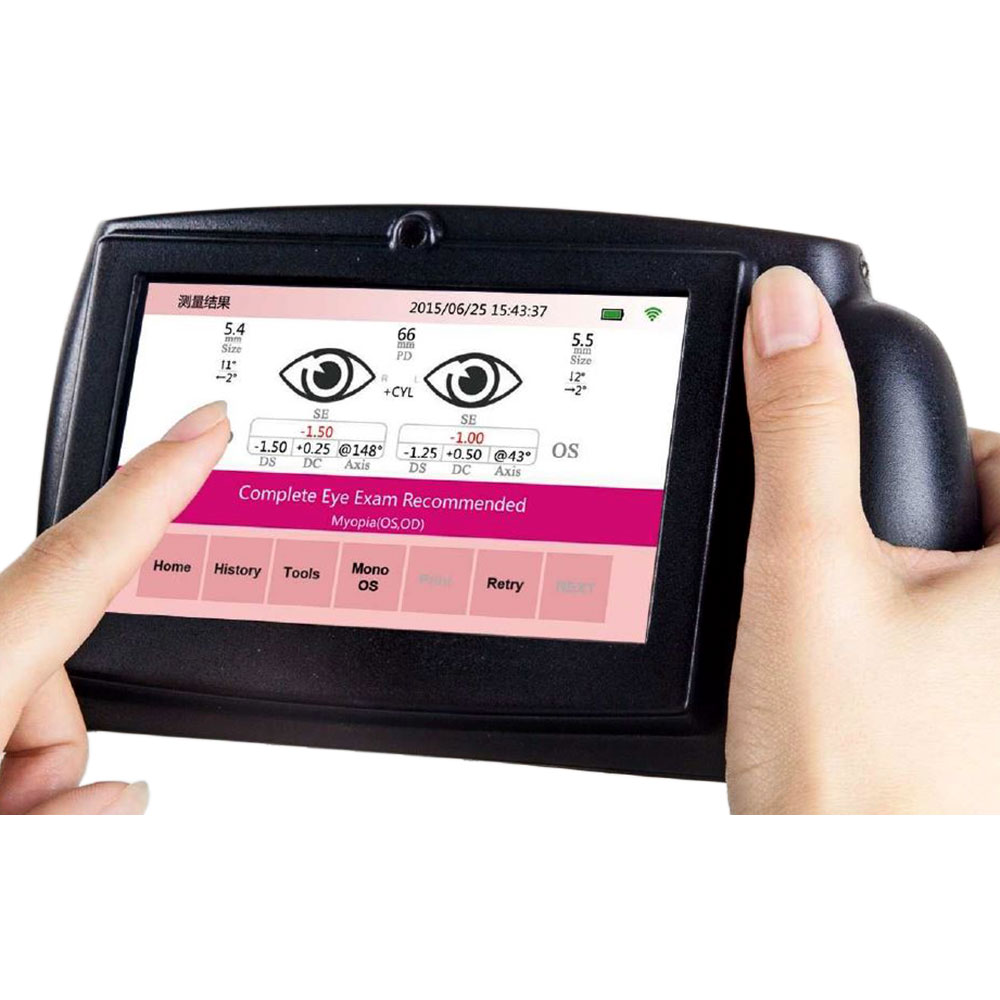
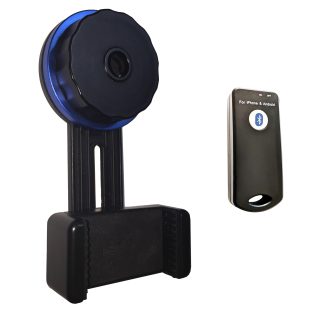
In a mobile setting, you need objective refraction that doesn’t depend on a phoropter lane. A handheld autorefractor or dedicated vision screener handles both adults and pediatric patients in any environment — school gym, nursing home room, or field tent. The Vision Screener Digital Eye is our most-requested unit for this application: it screens refraction, amblyopia risk, and strabismus from three feet in under five seconds, no cooperation required. For practices that need full autorefraction plus keratometry readings, the Righton Retinomax K-Plus 3 delivers full ARK measurements in a ruggedized handheld body with a carrying case built for transport.
2. IOP: Portable Tonometer
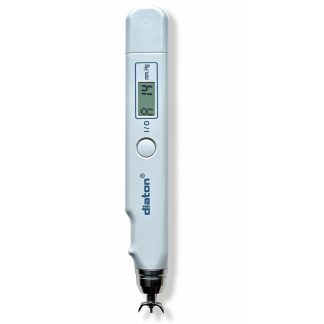
A standard Goldmann applanation tonometer is fixed to a slit lamp — not useful when you’re on the road. For mobile screening, you have two practical options: a handheld non-contact tonometer or a through-the-eyelid unit like the Diaton Tonometer. The Diaton is the smallest and most portable IOP tool available — it transpalpebral measurement requires no anesthetic drops, no calibration, and works even with a compromised cornea. For practices that want contact applanation, Tono-Pen-style units are the standard compact alternative.
3. Anterior Segment: Portable Slit Lamp
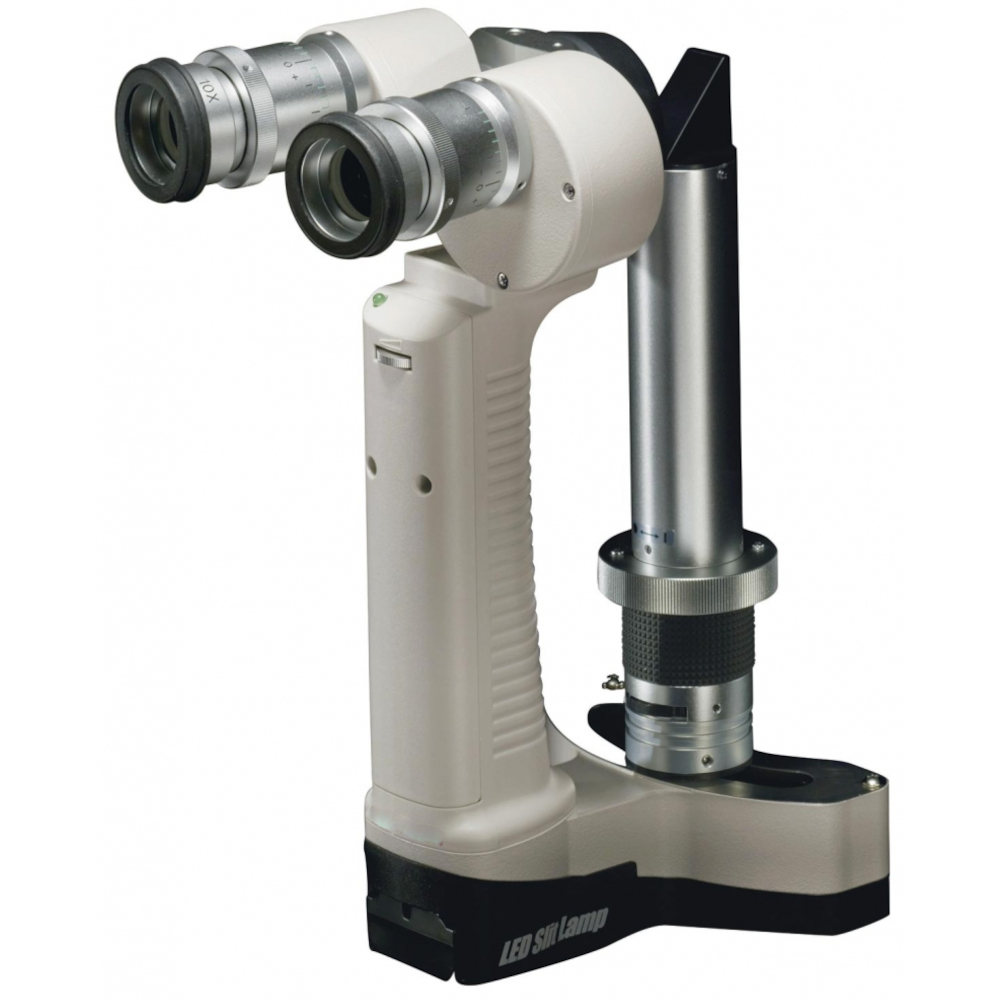
A portable slit lamp is non-negotiable for any mobile program doing anterior segment exams, ROP screening, or post-op follow-up visits. The Portable Slit Lamp S2 is the entry-level workhorse — lightweight, battery-powered, slit beam with magnification, available under $1,500. For step-up performance, the Handheld Slit Lamp S200 adds a wider magnification range and brighter illumination. Both units fit in a carry-on bag and run on rechargeable batteries with enough power for a full clinic day.
4. Fundus Evaluation: Portable Fundus Camera or Indirect
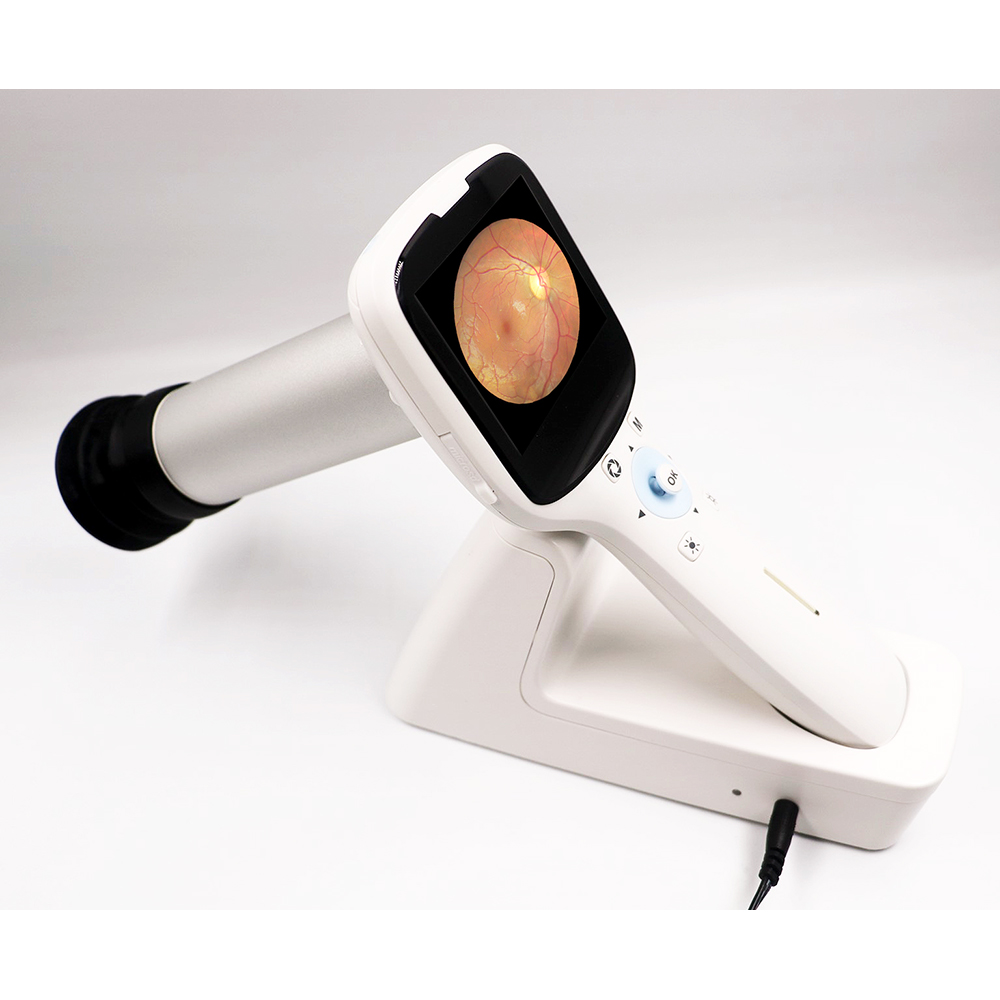
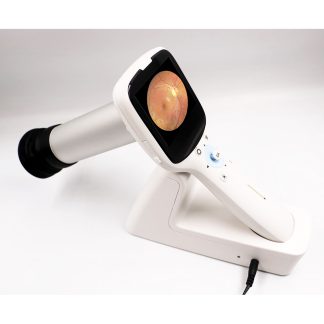
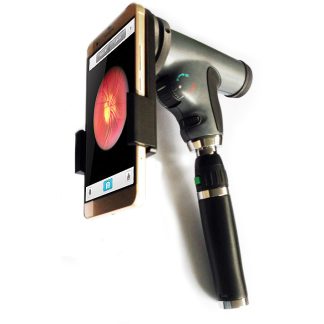
Retinal evaluation is where mobile clinics vary most in approach. A portable non-mydriatic fundus camera like the FC-1000P captures retinal images without dilation — critical for diabetic retinopathy screening programs where dilation would double your visit time. The images are documentable, shareable, and usable for teleophthalmology review. For surgical outreach or ROP programs, a binocular indirect ophthalmoscope is more practical — it works in low-light environments, doesn’t require a power source, and gives the clinician direct peripheral fundus access that no camera replicates.
What You Can Skip (at First)
A full visual field analyzer, OCT, or corneal topographer has no place in most mobile clinic configurations. These are large, power-hungry instruments that require a stable exam environment and a patient who can hold steady for 3–8 minutes. Build the core five-instrument kit first. Once your program is running and you’ve identified the specific unmet needs in your patient population, you can add specialty instruments for return visits or hub-and-spoke referrals.
Equipment Selection by Program Type
Diabetic retinopathy screening: Vision screener, portable fundus camera, Diaton tonometer. Skip the slit lamp unless you’re doing corneal exams. Pediatric mobile programs: Vision screener is the anchor instrument — it’s faster than subjective refraction and doesn’t require patient cooperation. Add a portable slit lamp for ROP or trauma follow-up. Post-surgical follow-up: Portable slit lamp and tonometer are mandatory. Fundus camera if you’re managing retinal cases remotely. International medical missions: Prioritize battery runtime and case protection. Every instrument should have a hard-sided carrying case and run at least 4 hours per charge.
If you’re building a mobile program from scratch or replacing aging equipment, contact us to discuss which units work best for your specific setting and patient volume. We ship from Miami within 2–3 business days and all units include a warranty.