You’re choosing a portable fundus camera or a tabletop system, and the spec sheets won’t tell you which one actually fits your day. The decision comes down to two things almost nobody puts on a quote: how many eyes you image per session, and whether the patient comes to the camera or the camera comes to the patient.
Settle the refurbished question first
 Before you compare form factors, decide whether you’re buying new or refurbished, because it changes the math on everything else. A refurbished tabletop unit often costs less than a new portable, which can flip your whole decision. The risk with refurbished isn’t the optics — it’s what was done to the unit before it reached you.
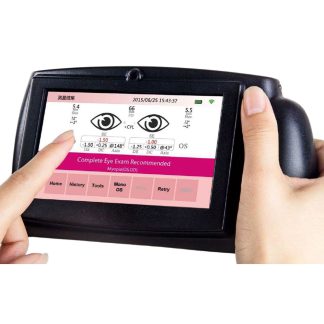
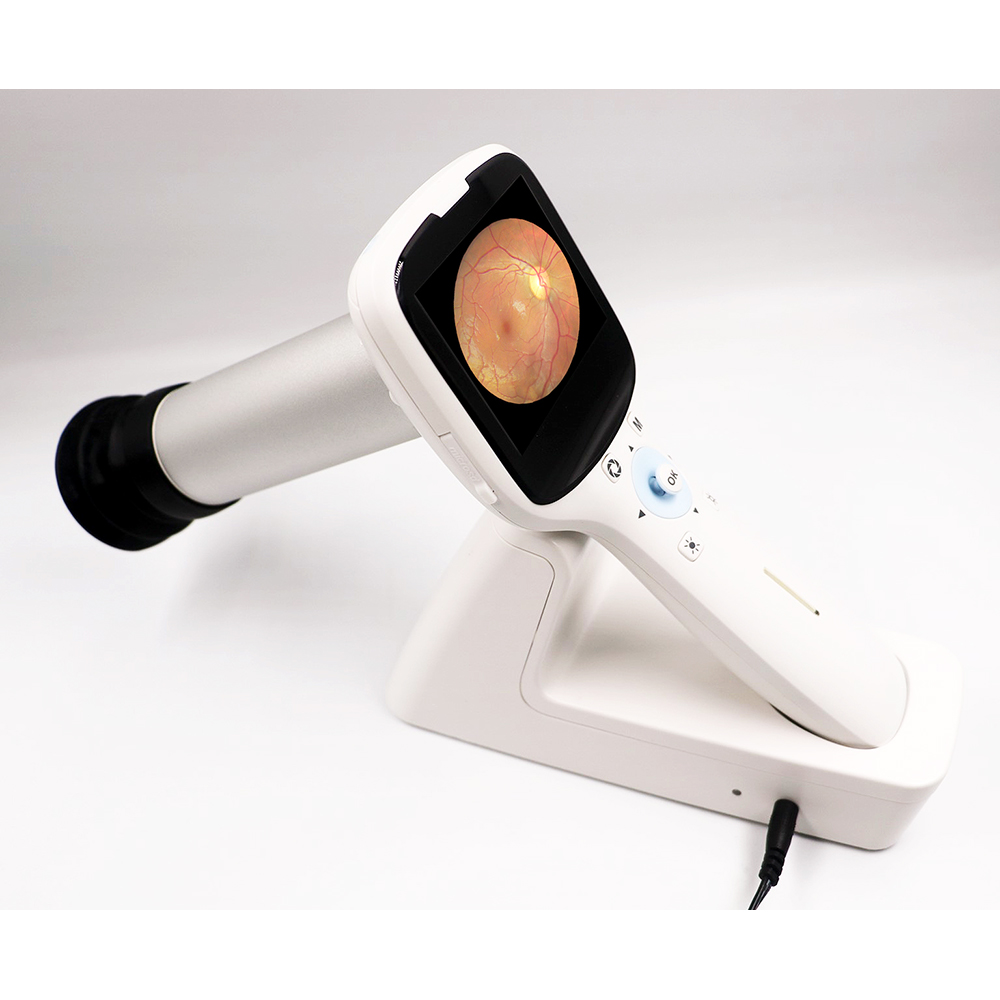
Ask for specifics: what was inspected, what was replaced, and whether optical alignment was re-tested after any disassembly. A camera that boots and captures in a showroom can still throw soft images once it’s back in clinical use if alignment was never verified. The portable FC-1000P is one example of a new portable that competes directly with refurbished tabletops on price, which is exactly why the new-versus-refurbished question has to come first.
What actually separates portable from tabletop
Once the trust question is cleared, four differences decide the rest.
Non-mydriatic capability matters more at volume
If you’re imaging more than 15 patients a day, non-mydriatic isn’t a luxury — dilation kills throughput at that volume and patients hate the wait. Most modern portables and tabletops are non-mydriatic; confirm the minimum pupil size the unit needs in a dim room, not the spec-sheet ideal.
Field of view sets what you can screen for
A 45-degree field covers routine diabetic and hypertensive screening. If you’re chasing peripheral pathology or building a referral-grade retina workflow, you’ll feel the limit of a narrow field fast. Widefield tabletop systems exist for this reason — but most general screening simply doesn’t need them.
Throughput is where tabletops still win
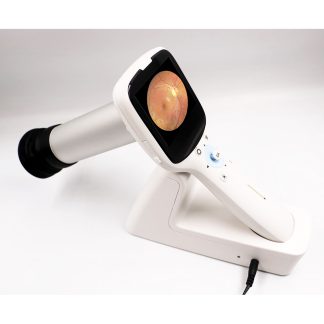
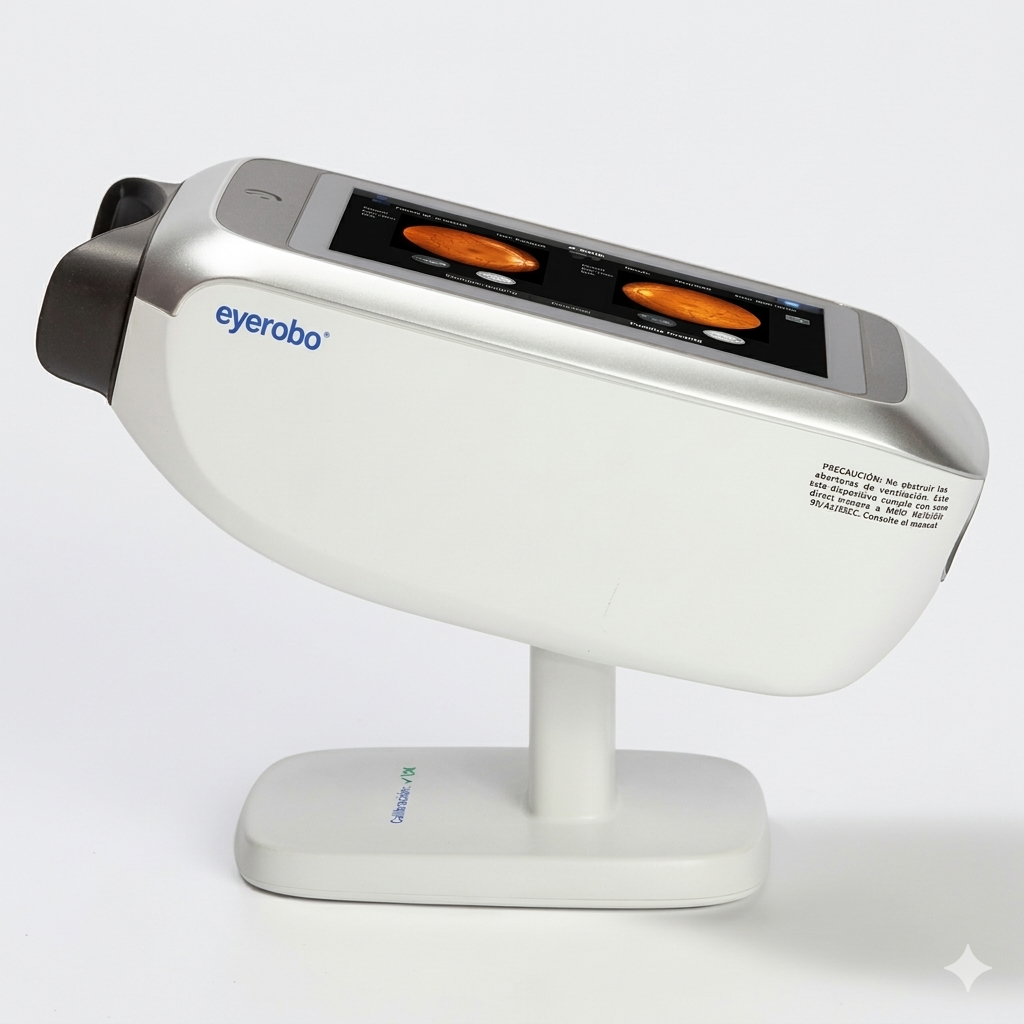 A fixed tabletop with a chin rest and joystick alignment is faster per capture once a patient is seated. A portable like the Eyerobo Iflash trades a little of that per-capture speed for the ability to image a patient in a wheelchair, a nursing-home bed, or a remote clinic where a tabletop would never go. The question isn’t which is faster in the abstract — it’s which removes the bottleneck in your actual setting.
Portability is a workflow decision, not a convenience
If your imaging happens in one room with one operator, portability buys you nothing and tabletop ergonomics buy you speed. If your patients are spread across sites or can’t be positioned at a fixed instrument, portability is the entire point.
Which one fits your practice
A solo optometrist documenting the occasional finding in one lane is better served by a compact non-mydriatic unit that doesn’t dominate the room. A clinic running monthly diabetic screening across satellite sites needs a portable it can carry. A busy retina or multi-provider practice imaging dozens of seated patients a day will get more out of a tabletop’s per-capture speed and wider field.
What to verify before you buy a refurbished fundus camera
Whichever form factor you land on, run the unit through the same checklist:
- What specifically was inspected, and what was replaced?
- Was optical alignment re-tested after reassembly?
- What is the real minimum pupil size in a dim room?
- Does the capture software run on a supported OS and export to your EMR format?
- What warranty is included, and what does it actually cover?
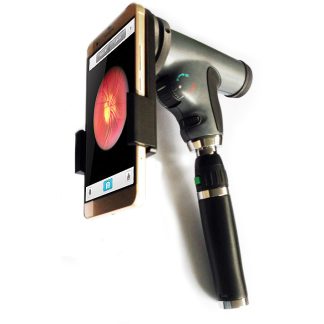
Currently in stock: the portable FC-1000P, the Eyerobo Iflash retinal camera, and the Haag-Streit Fundus Module 300 for slit-lamp-mounted imaging.
Every refurbished unit we sell is inspected and verified by a certified ophthalmic equipment technician before it ships, and each listing states whether it is used or refurbished along with its warranty.
Call us at 305-771-4562 and tell us how many eyes you image per session and where — fixed lanes or satellite sites — and we’ll point you to the right body. You can also contact us here or browse our full fundus camera inventory.