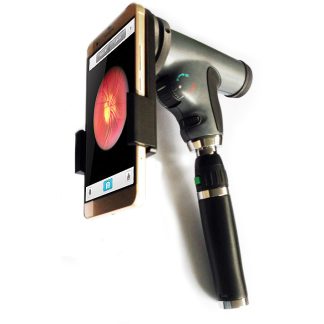
You need a portable slit lamp because the patient cannot get to your lane — bedside rounds, a nursing home, a school screening day, or a satellite office that does not justify a full table setup. The trouble is that “portable” gets used for everything from a true one-hand handheld to a shrunken tabletop that merely fits in a case. Sorting that out first saves you from buying the wrong instrument.
Handheld or simply transportable? Settle this before anything else
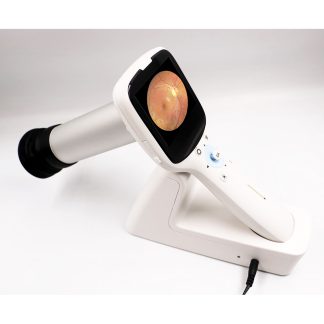
 A true handheld runs on battery, weighs two to three pounds, and is operated with one hand while the other steadies the patient. You examine a supine patient, a child in a parent’s lap, or someone in a wheelchair without repositioning anyone. The Handheld Slit Lamp S200 and the Portable Slit Lamp S2 both sit in this category.
A transportable unit is a compact tabletop with a chin rest that packs into a case. It gives you steadier optics and a more familiar exam, but it needs a table, a seated patient, and a few minutes of setup. If your reason for buying is that the patient cannot sit upright at a table, a transportable unit does not solve your problem no matter how light it is.
The four specs that actually change the exam
Magnification steps
If you are looking for corneal abrasions, foreign bodies, and anterior chamber reaction, two steps around 10x and 16x will carry the majority of your portable work. Push toward finer endothelial detail or subtle cell and flare grading and the limits of a handheld show up quickly. Buy for the exams you actually perform away from the lane, not for the ones you perform in it.
Illumination quality and slit control
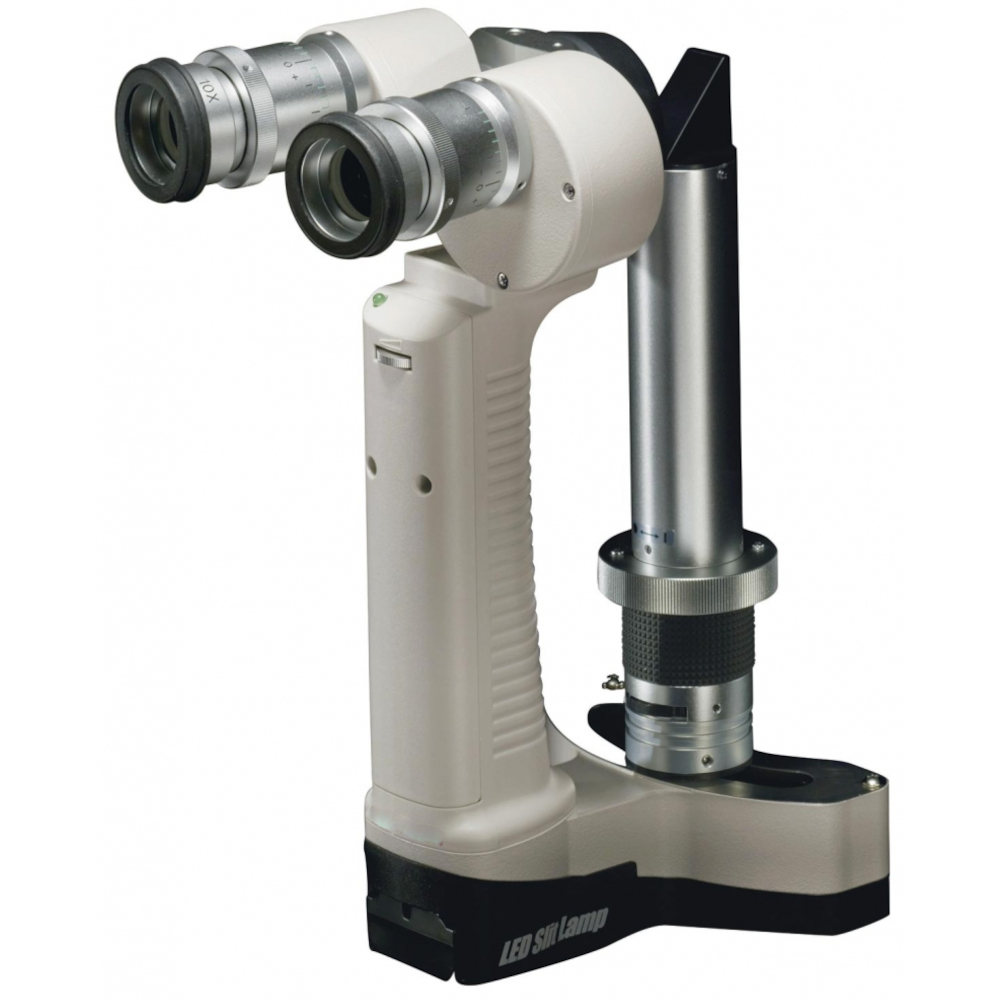 Slit width and height adjustment matter more than raw brightness. A unit that only offers a couple of fixed slit widths limits your ability to judge chamber depth or estimate an infiltrate. Colour temperature matters too: older halogen illumination shifts colour rendering enough to affect how you read an injected eye, which is why practices often retrofit their lane instruments with an LED conversion kit.
Battery life and charge behaviour
A four-hour battery is fine for hospital rounds. It is not fine for a screening day where you see sixty children and have nowhere to plug in. Ask for runtime under continuous illumination rather than standby, and ask whether the unit runs while charging — that single answer decides whether a dead battery ends your clinic or merely tethers you to an outlet.
Stability and working distance
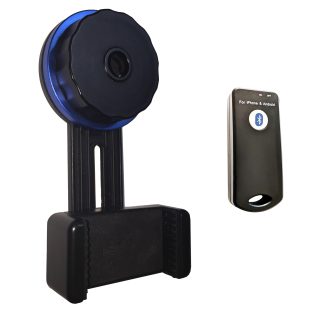
Hand tremor is the real constraint on a handheld, and it grows over a long session. Units with a forehead or temple rest give you a fixed working distance and a noticeably steadier image. If you plan to capture images, factor in whether the unit accepts a smartphone adapter, because documenting a finding at the bedside is often the entire reason the instrument leaves the office.
What to verify before buying a used or refurbished unit
Portable instruments live harder lives than lane instruments. They get dropped, packed wet, and stored in car trunks. Ask specifically:
- Was the battery replaced, and what is its measured runtime today?
- Has the optical path been cleaned and realigned since the last service?
- Do all slit widths, heights, and filters move through their full range without binding?
- Is the illumination free of dark spots or uneven falloff across the slit?
- What does the warranty cover, and does it include the battery?
Which setting each option fits
A hospital consult service or a mobile practice doing bedside work needs a true handheld, and the battery question outranks the magnification question. A school or community screening programme needs durability and fast turnaround between patients more than it needs fine anterior detail. A satellite office seeing scheduled, ambulatory patients is usually better served by a compact tabletop, since the patients can sit and the optics are better for the money.
Currently in stock: Handheld Slit Lamp S200, Portable Slit Lamp S2, Universal Slit Lamp Adapter for Smartphones, and OptiLight LED Conversion Kits.
Every unit we sell is inspected and verified by a certified ophthalmic equipment technician before it ships, and each listing states plainly whether it is new, used, or refurbished along with the warranty that applies.
Call us at 305-771-4562 and tell us where the instrument will be used — bedside, screening, or a second lane — and we will tell you which of these fits and which does not. You can also contact us here or browse our full portable slit lamp inventory.