You’re looking at an auto phoropter because refraction is eating your schedule, and you want to know whether automation actually pays off or just moves the bottleneck somewhere else. The honest answer depends on your volume, your pretest equipment, and who does the refracting in your office.
What an Auto Phoropter Changes (and What It Doesn’t)
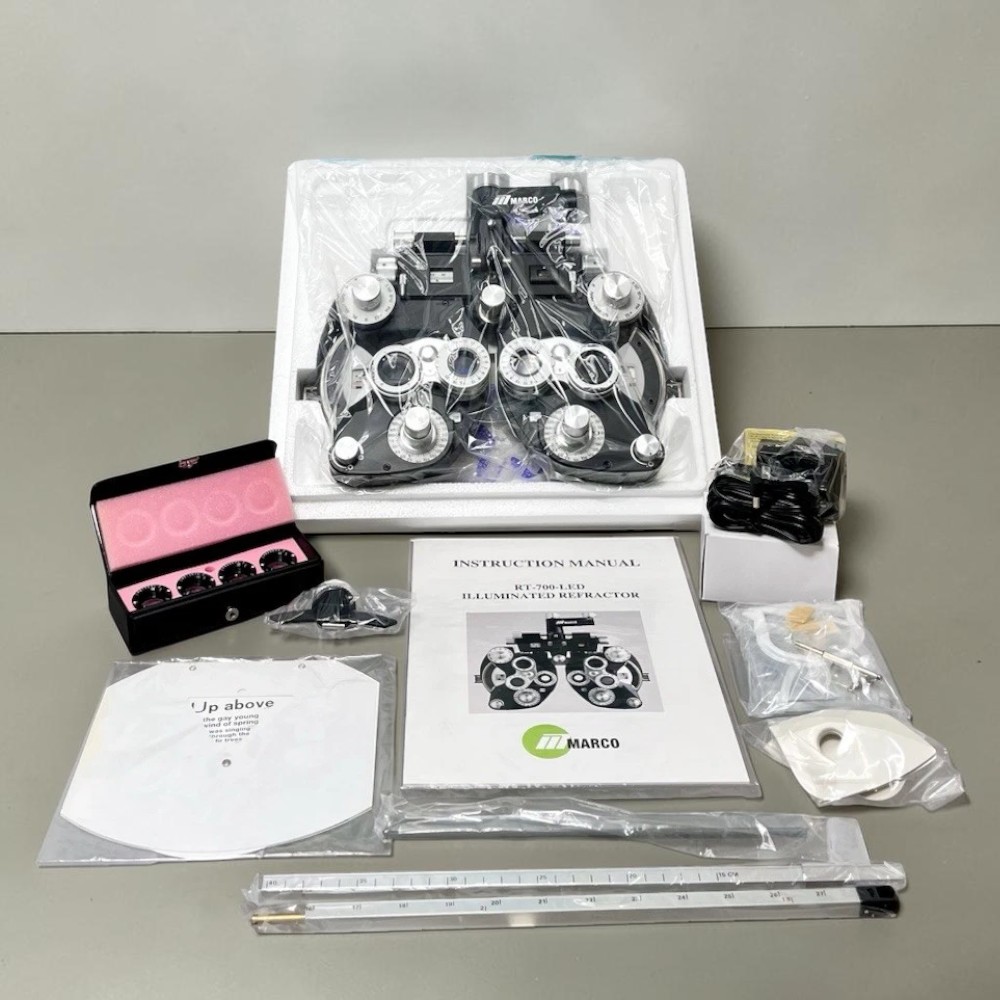 An automated phoropter, also called an automatic or digital refractor, replaces the dials and knobs of a manual refractor head with motorized lens changes driven from a control box at your desk. Systems such as the Nidek RT-5100, Topcon CV-5000 and Reichert Phoroptor VRx all follow the same idea: you stay seated, the patient stays put, and lens changes happen in a fraction of a second.
What it does not change is the subjective refraction itself. You still ask “one or two,” you still balance, and you still own the final prescription. The gain comes from shorter transitions and less physical work, not from the instrument making clinical decisions for you.
Once you see automation as a workflow tool rather than a diagnostic upgrade, the buying decision gets much clearer.
Where the Time Savings Actually Come From
Data import from pretest instruments
If your technicians already run an autorefractor and an auto lensmeter, a connected auto phoropter can load those readings as the starting point and the old prescription for comparison. You start refining from a close number instead of dialing it in by hand. If your pretest devices can’t talk to the refractor, you lose most of this advantage.
Faster old-versus-new comparisons
Showing a patient the habitual prescription against the new one takes a single button press on most automated systems. On a manual phoropter it takes several dial turns, and the patient has to remember what the first view looked like.
Ergonomics over a long day
If you refract 25 or more patients a day, the repetitive reaching and dial turning adds up. Many doctors who switch say the reduced strain on the shoulder and wrist matters as much as the minutes saved.
When a Manual Phoropter Is Still the Right Call
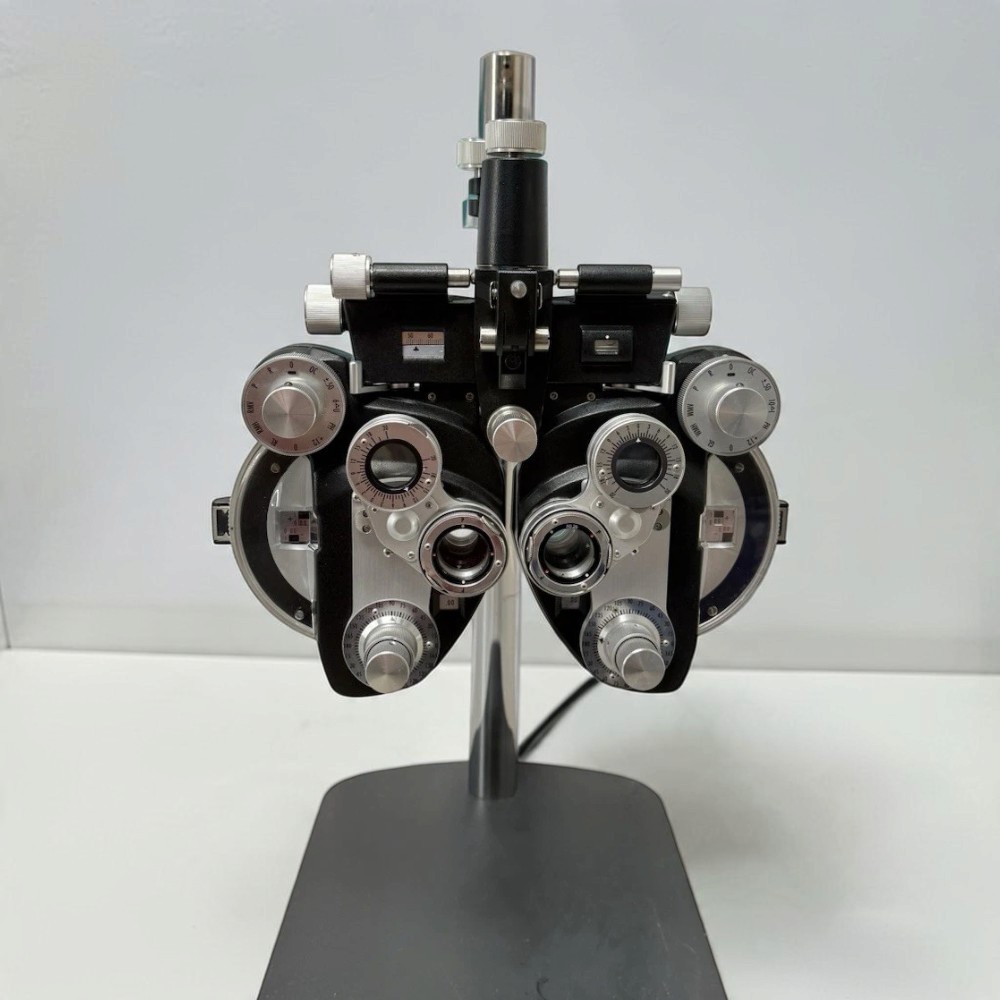 A low-volume practice, a satellite office open two days a week, or a second lane that only sees overflow rarely justifies an automated system. A well-maintained manual refractor such as a Reichert Ultramatic, a Marco RT-700 or a Topcon VT-10 delivers the same refraction quality for a fraction of the cost, with no software, cables or control box to fail.
Manual units also make sense when your pretest instruments are older and can’t export data. Without that connection, an auto phoropter is mostly a motorized version of what you already have.
A practical scenario: a solo optometrist seeing 12 patients a day in one lane gets little from automation. A two-doctor practice running three lanes with a technician doing pretests will feel the difference within the first week.
What to Check Before Buying a Used Auto Phoropter
Used automated refractors can be an excellent value, but they have more moving parts than a manual head. Before you commit, ask the seller:
- Does the unit include the control box, cables and power supply, and have all been tested together?
- Have the lens-change motors been checked across the full sphere, cylinder and prism range?
- Which autorefractors and lensmeters is it confirmed to communicate with, and over which connection?
- Does it pair with the acuity chart or chart system you already use?
- What warranty is included, and does it cover the control box as well as the refractor head?
Compatibility is the item buyers most often skip. A refractor that can’t read your existing autorefractor’s output turns a time saver into a data-entry chore.
Currently in stock: manual refractors from Reichert, Marco, Topcon and Burton in plus and minus cylinder configurations, ready for a new lane or a backup. You can browse our full phoropter inventory, and pair it with a pretest unit from our used autorefractors.
Every phoropter we sell is inspected by a certified technician before it ships, and it ships from Florida within 2–3 business days with a warranty.
Call us at 305-771-4562 and tell us how many patients you refract per day and what pretest equipment you run, and we’ll tell you whether an automated or manual refractor makes more sense for your lanes. You can also contact us here.