You’re pricing an autorefractor machine and the refurbished units are running thousands less than new — but you’re not sure what that discount is actually costing you. Here’s how to tell a solid refurbished unit from a gamble before you wire the money.
New vs. refurbished: where the real risk lives
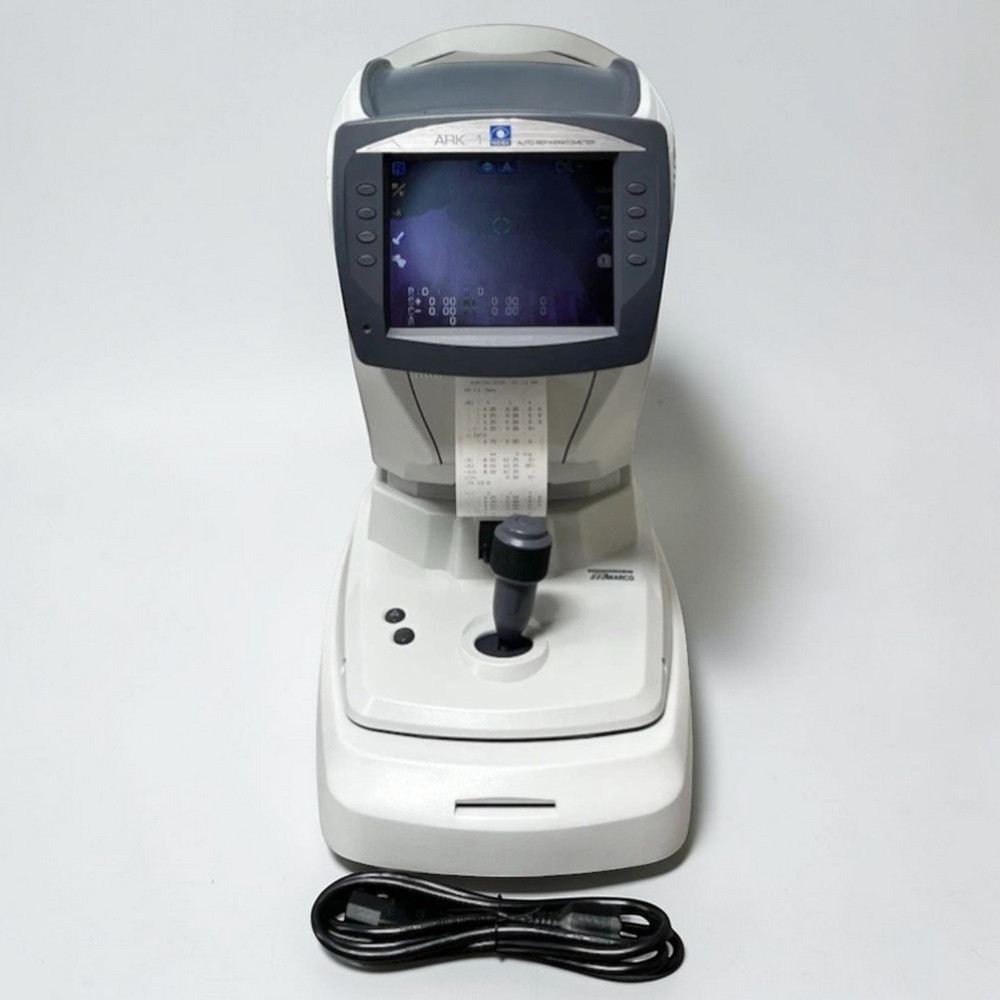 An autorefractor is one of the safer instruments to buy used, because the measurement head is largely optical and solid-state — there’s no consumable light engine to burn out the way an OCT or fundus camera can. The risk isn’t the technology aging out. It’s whether the specific unit in front of you was actually serviced, or just wiped down and photographed.
The two questions that separate a real refurbishment from a resale: was the unit calibrated against a model eye after any repair, and does the keratometry still track against a known reference? A sphere/cylinder reading that drifts half a diopter is worse than useless in a busy lane — it sends techs back to retinoscopy and erodes trust in the number.
The specs that actually change your day
Measurement range and combined ref/kerato
If you’re fitting contacts or doing pre-op work, a combined auto ref/keratometer (an “ARK” unit) earns its keep by pulling refraction and corneal curvature in one seating. Most refurbished units on the market — the Nidek ARK series, Topcon KR line, Reichert RK models — are ARK units, so you rarely have to trade this away to buy used.
EMR connectivity and firmware
This is where used units quietly bite. A ten-year-old autorefractor machine may only output over RS-232, or run firmware that your EMR’s device bridge no longer recognizes. Ask for the firmware version in writing and confirm your EMR vendor still lists it as supported before you buy.
Throughput features
Auto-alignment and auto-shot matter more the busier you are. A solo OD documenting a few refractions a day won’t notice manual joystick alignment; a screening practice running thirty patients will feel every extra second.
Which unit fits which practice
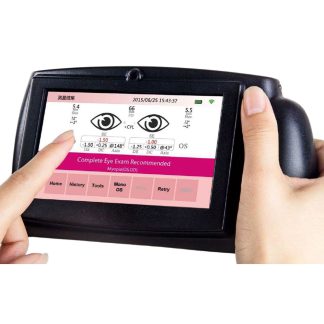
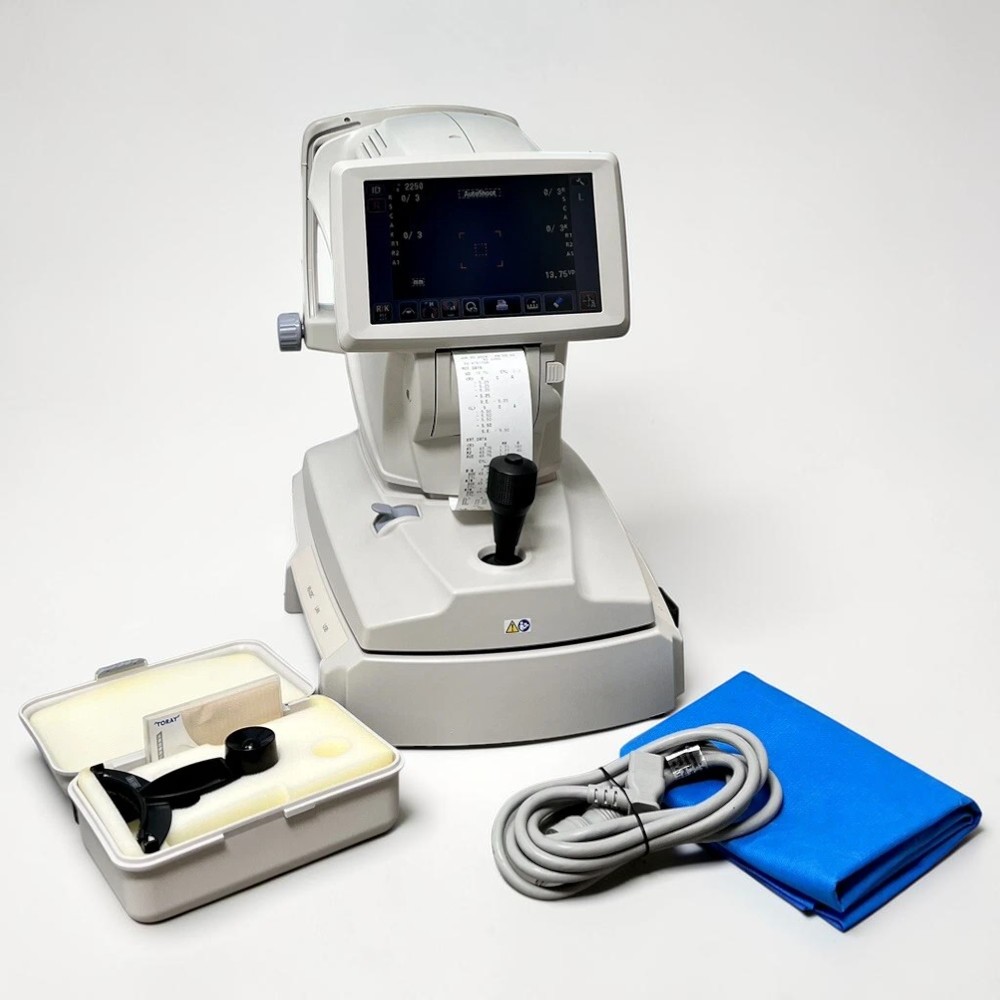 A small private practice replacing a dead unit usually wants a proven tabletop ARK — a Topcon KR-800 or KR-8900, a Nidek ARK-1, or a Reichert RK unit — where parts and service techs are still easy to find. A mobile or satellite operation is a different animal: a handheld auto ref/keratometer like the Retinomax line travels and runs on battery, which a lane-bound tabletop can’t do.
Don’t over-buy. A wavefront-capable unit is real money and only pays off if you’re doing refractive surgery planning. For routine refraction, it’s spec you’ll never bill for.
Questions to ask before you buy a refurbished unit
Treat this as a checklist and get the answers in writing:
- What specifically was inspected, and what was replaced or repaired?
- Was the unit calibrated against a model eye after reassembly?
- What firmware version is it running, and has your EMR vendor confirmed support?
- Does keratometry track against a reference — can they show a test reading?
- What warranty is included, and does it cover the measurement head, not just the shell?
Currently in stock: we carry used and refurbished autorefractor keratometers from Nidek, Topcon, Reichert, Tomey, and Righton — tabletop ARK units for the lane and handheld models for mobile work. You can browse our autorefractor inventory to see what’s available right now; because these units rotate quickly, stock and configuration change week to week.
Every used autorefractor we list is inspected and verified by a certified ophthalmic equipment technician before it ships, and it ships from Florida within 2–3 business days with a warranty.
Call us at 305-771-4562 and tell us what you’re fitting and how many patients a day you run — we’ll point you to the right unit or contact us here.