You’ve priced a fundus camera three ways this month and the quotes are thousands of dollars apart for what looks like the same job. The fundus camera price spread is real, but it isn’t random — it follows field of view, imaging modes, and how the unit was handled before it reached you. Here’s how to read the numbers so you pay for what your practice will actually use.
Start with the trust question: new, used, or refurbished
Condition moves price more than brand. A new tabletop non-mydriatic camera from a major manufacturer is a five-figure purchase before software and a table. The same model bought used or refurbished typically lands at a fraction of that, which is why most independent practices start on the secondary market.
The difference between “used” and “refurbished” is the inspection behind it. A refurbished unit should have had its optics cleaned, flash and focus verified, and image capture tested across fixation targets. A used unit may only have been powered on. Ask which one you’re getting, because the warranty usually tells you.
Once you’ve cleared the condition question, these are the tiers that explain most of the price gap.
What each price tier actually buys
Handheld and portable cameras
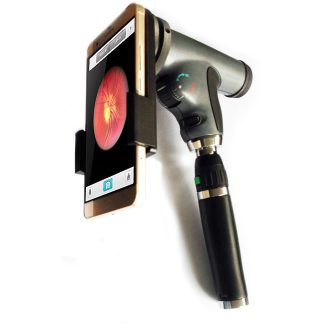
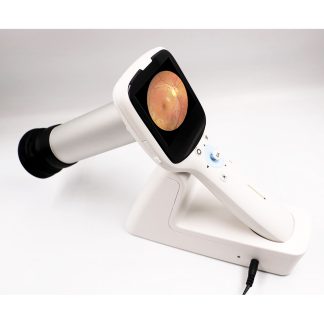
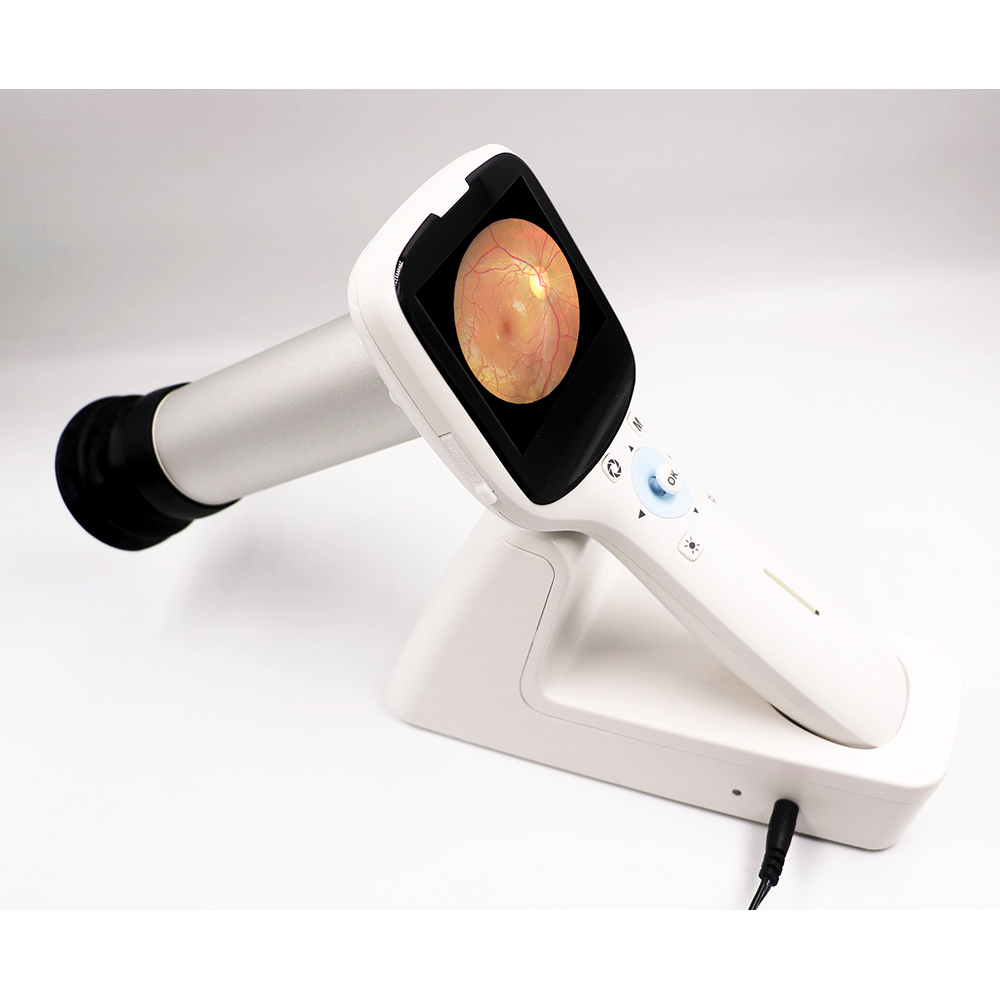 If you screen outside the lane — nursing homes, school programs, diabetic outreach — a handheld is the entry point, generally in the low-to-mid thousands. The trade-off is field and resolution: a unit like the FC-1000P portable fundus camera gives you 45° non-mydriatic images that are fine for documentation and referral, not for fine macular detail.
Tabletop non-mydriatic screening cameras
If you see more than a handful of diabetic patients a day, dilation kills throughput, and a tabletop non-mydriatic camera pays for itself in chair time. On the refurbished market, core screening models such as the Topcon TRC-NW400 or a Zeiss Visucam Pro NM have tended to list in roughly the $5,000–$9,000 range depending on the computer, software version, and table included. A new option like the Eyerobo iFlash retinal camera adds auto-focus and a 50° field for teams where the operator isn’t a photographer.
Angiography-capable systems
Fluorescein angiography, FAF, and ICG are where the price climbs into the mid-teens and above, even refurbished. If you’re a retina practice, that’s the tier you need. If you’re a general OD practice documenting the posterior pole, you’re paying for modes you’ll never run.
The hidden costs that change the real price
The sticker is only part of the number. Software licensing, a working capture PC, and EMR connectivity can each turn a cheap unit into an expensive project. A camera that can’t export DICOM or connect to your records system means manual uploads every day, and that cost compounds.
 If you already run a Haag-Streit 900-series slit lamp, there’s a cheaper path than a second instrument: the Haag-Streit Fundus Module 300 adds 40° retinal imaging to the lamp you own, with no extra floor space and no separate service contract.
Before you compare quotes, verify the same things on every unit:
- Does it capture sharp images on small pupils, and what minimum pupil is it rated for?
- Which software version and capture PC come with it — and is the license transferable?
- Does it export DICOM or integrate with your EMR?
- Was flash, focus, and fixation tested after inspection, and are sample images available?
- What warranty is included, and does it cover the optics and the flash?
Matching the tier to your practice
A solo optometrist who wants occasional documentation and referral images doesn’t need the same camera as a multi-doctor practice running a diabetic screening day every week. The first is well served by a handheld or slit lamp module. The second needs a tabletop non-mydriatic unit with reliable EMR export. Only a retina practice should budget for angiography.
The cheapest camera that fits your volume is the right one. Overspending on modes you don’t use ties up capital you could put into OCT or visual fields.
Currently in stock: the FC-1000P portable fundus camera, the Eyerobo iFlash, the Haag-Streit Fundus Module 300, and a rotating selection of used and refurbished Zeiss Visucam and Topcon tabletop cameras in our fundus camera category.
Every used and refurbished unit we sell is inspected and function-tested by a technician before it ships from Florida, and it comes with a warranty.
Tell us how many patients you image a week and what you need the images for — screening, referral, or angiography — and we’ll point you to the tier that fits. Call 305-771-4562 or contact us here, or browse our full fundus camera inventory.