Description
This exact unit sold recently — but we specialize in sourcing refurbished ophthalmic equipment. Typical turnaround is 2–4 weeks once we confirm availability with our partners. Request a free quote with no deposit required.
Request Availability → Free quote · No obligation · 90-day warranty when shipped
Similar Fundus Cameras In Stock Now
Need a comparable fundus camera available today? These units are in stock and ready to ship with a 90-day Digital Eye Center warranty.
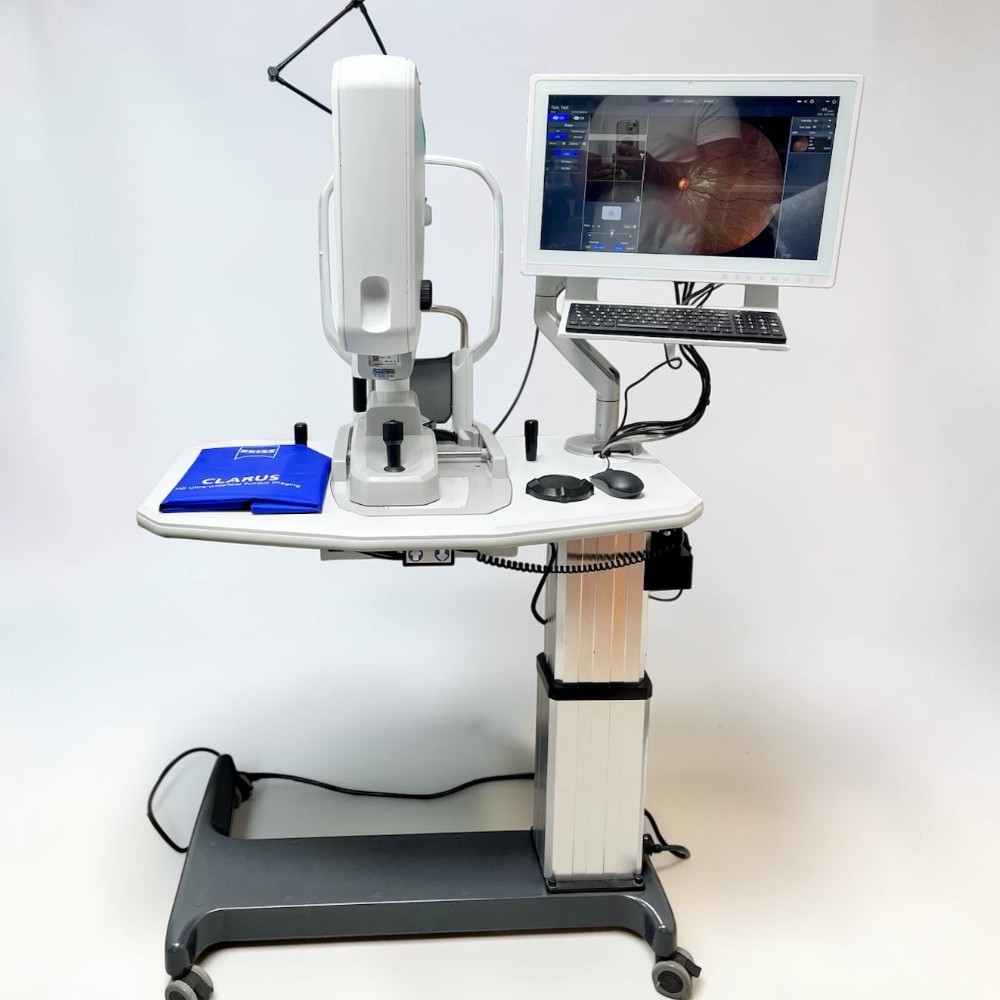
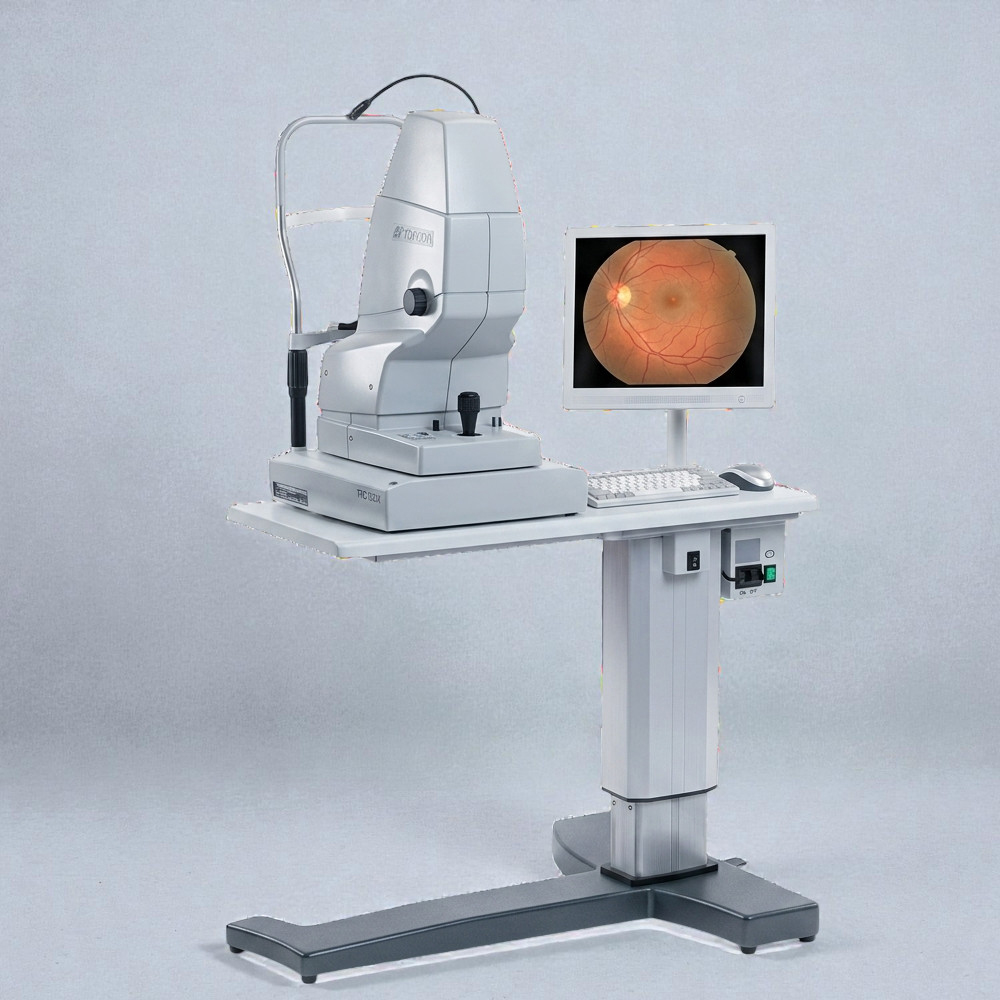
Prefer to wait for the Zeiss Visucam – 524 – Fundus Camera – Refurbished? Request availability and we’ll source one for you.
What’s Included
- Zeiss Visucam 524 fundus camera
- Workstation / PC with VISUPAC software
- Power cabling (as photographed)
- 6-month Digital Eye Center warranty
Condition & Warranty
Refurbished. Tested and refurbished before listing — 24 MP sensor acquisition verified, 45° non-mydriatic capture confirmed through 3.6 mm pupil, color, red-free, and autofluorescence imaging modes validated, auto-focus and auto-alignment confirmed, VISUPAC software boot and image-export workflow verified, calibration check completed. Covered by a 6-month warranty on parts and workmanship.
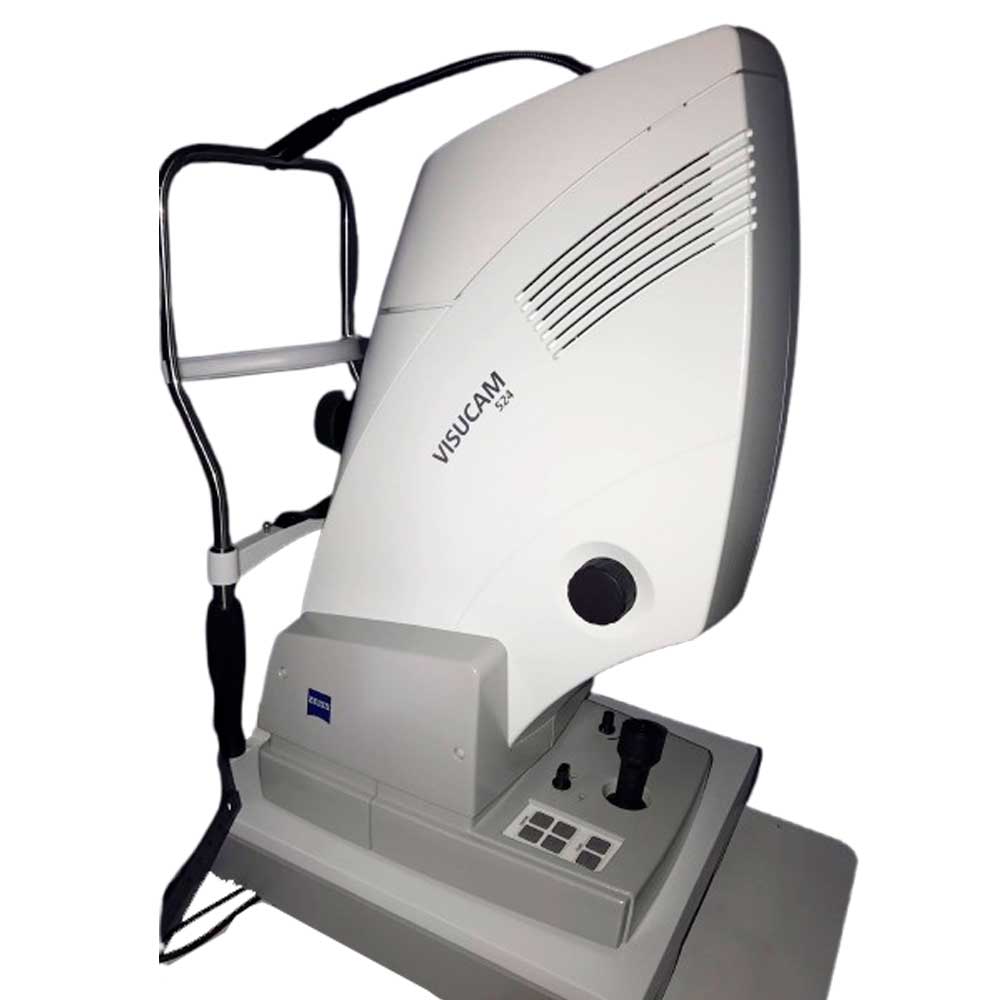
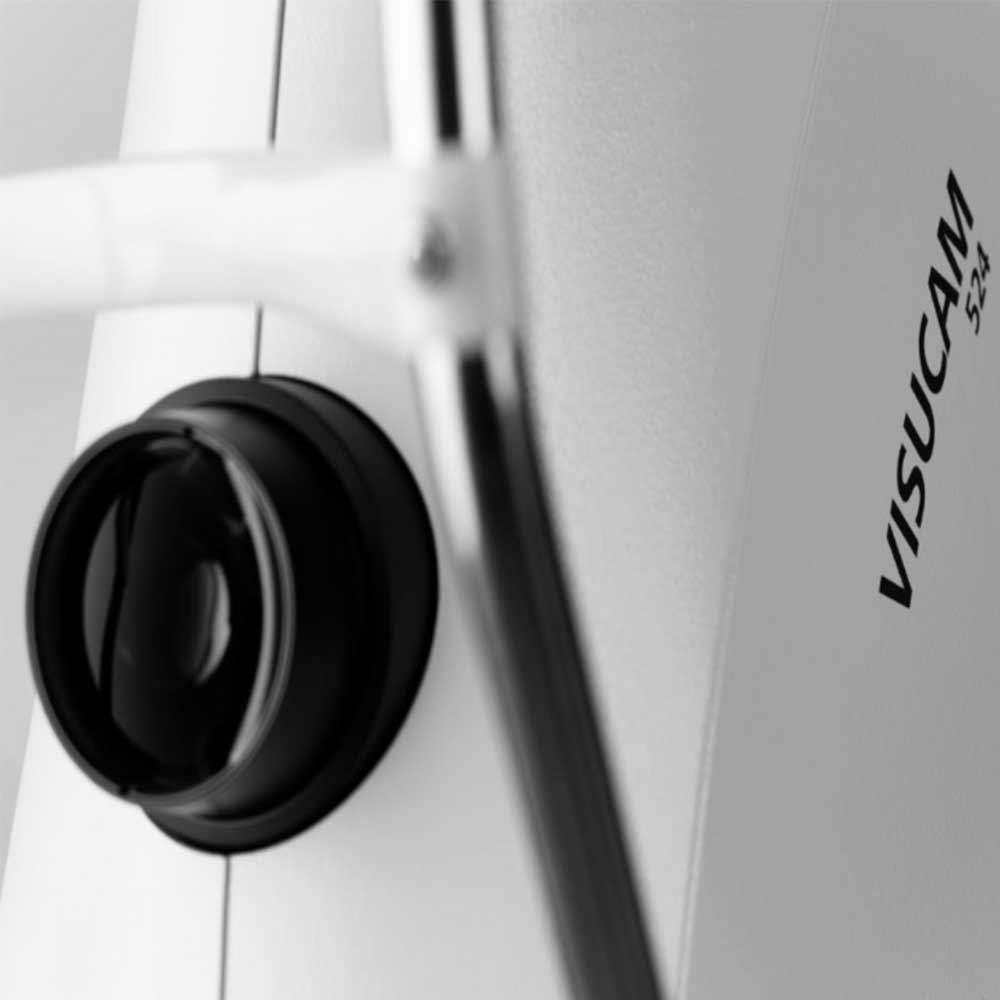
Zeiss Visucam 524 — Refurbished 24 MP Non-Mydriatic Fundus Camera
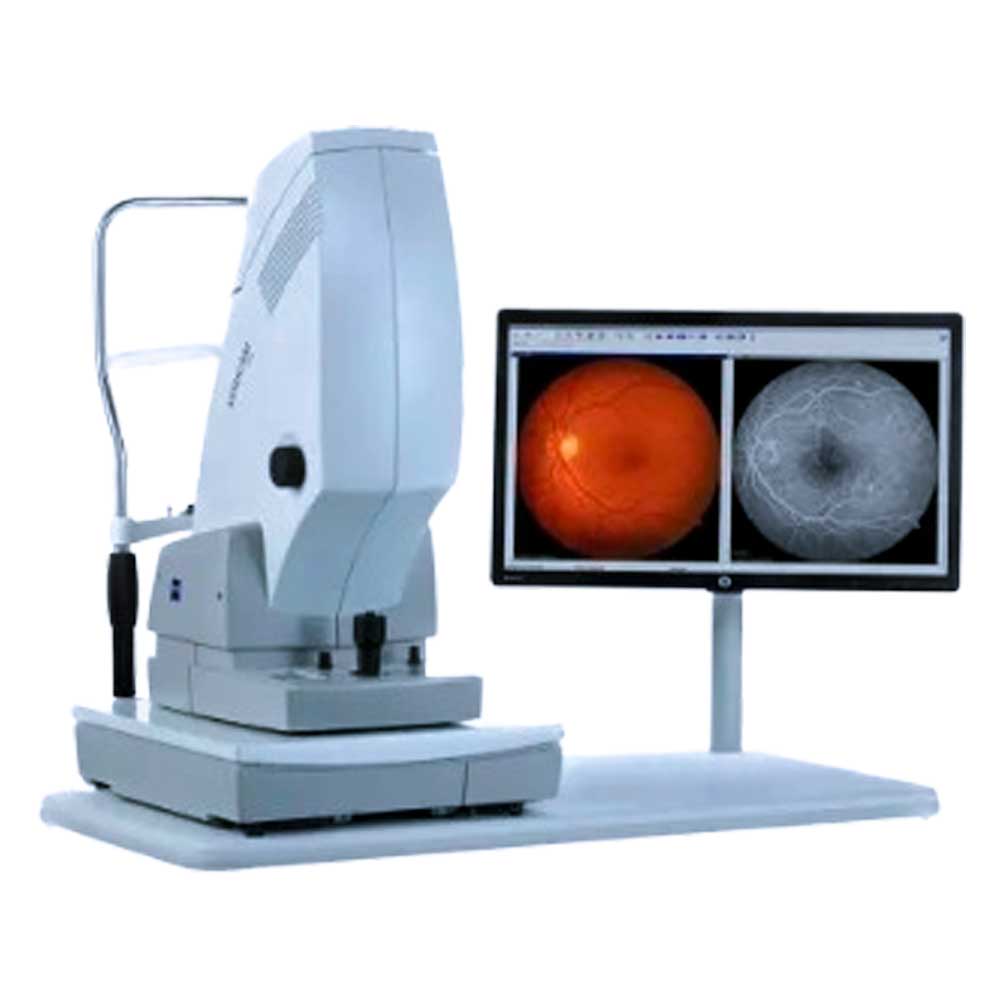 The Zeiss Visucam 524 is the mid-tier Visucam non-mydriatic fundus camera — 24 MP sensor, ZEISS precision optics, 45° field of view, and integrated color + red-free + autofluorescence imaging. This refurbished zeiss visucam 524 ships ready for diabetic retinopathy screening, glaucoma documentation, and routine fundus photography at a refurbished price point well below the larger Visucam 200 / PRO NMFA tiers.
The 524’s headline differentiators vs entry-level Topcon NW-series cameras are the higher-resolution 24 MP sensor and the integrated autofluorescence module — supporting AMD imaging and inherited-dystrophy phenotyping workflows the NW-series doesn’t cover. Auto-focus and auto-alignment streamline single-operator capture; the VISUPAC software bridges to common EMR systems.
According to a National Library of Medicine-indexed study (Indian J Ophthalmol, 2026), ophthalmic-instrument repeatability depends heavily on operator-instrument interaction — supporting the standardized auto-acquisition workflow Visucam was designed to deliver.
Why Practices Choose the Visucam 524
 24 MP sensor — high-resolution capture for fine retinal detail.
- ZEISS precision optics — clinical-grade image quality.
- 45° non-mydriatic (3.6 mm pupil) — no dilation for routine screening.
- Color + red-free + autofluorescence — multimodal pathology assessment.
- Auto-focus + auto-alignment — single-operator capture workflow.
- VISUPAC software — Zeiss reporting and EMR-friendly export.
- Refurbished tier with 6-month DEC warranty — significant savings vs new.
- Zeiss US service network — extensive parts and support availability.
Clinical Applications
- Diabetic retinopathy screening — non-mydriatic color + red-free DR documentation.
- AMD imaging — color + autofluorescence multimodal workup.
- Glaucoma optic-nerve documentation — ONH photography for follow-up.
- Inherited retinal dystrophies — autofluorescence phenotyping.
- Pre-cataract fundus documentation — non-mydriatic through 3.6 mm pupil.
- Tele-retina referral — high-resolution non-myd capture for remote review.
Who This Is For
- Optometry and ophthalmology practices wanting mid-tier Zeiss imaging at refurbished price.
- Practices needing autofluorescence beyond entry-level Topcon NW capability.
- Multi-doctor groups standardizing on Zeiss VISUPAC workflow.
- Diabetic retinopathy screening programs needing high-resolution color imaging.
- Buyers comparing Visucam 524 vs Topcon NW-400 vs Zeiss Visucam PRO NMFA.
Technical Specifications
| Specification | Detail |
| Type | Non-mydriatic fundus camera |
| Sensor | 24 MP |
| Imaging field | 45° |
| Minimum pupil | 3.6 mm (non-mydriatic) |
| Modalities | Color, red-free, autofluorescence |
| Automation | Auto-focus + auto-alignment |
| Software | VISUPAC |
| Manufacturer | Carl Zeiss Meditec |
| Condition | Refurbished — tested before listing |
| Warranty | 6-month DEC warranty on parts and workmanship |
Compare Fundus Camera Options
Where this Zeiss Visucam 524 fits in DEC’s fundus-camera inventory:
| Model | Field | Autofluorescence | Brand | Price | Notes |
| Zeiss Visucam 524 | 45° | Yes | Zeiss | $22,300 | 24 MP mid-tier — this listing |
| Zeiss Visucam PRO NMFA FAF ICG | 45° | FAF + FA + ICG | Zeiss | $17,100 | In stock — Refurbished multimodal |
| Zeiss Visucam PRO NMFA | 45° | No (FA only) | Zeiss | $15,200 | In stock — Refurbished w/FA |
| Zeiss Visucam NM/FA | 45° | No (FA only) | Zeiss | $8,800 | In stock — Used w/FA + electric table |
| Zeiss Visucam Pro NM | 45° | No | Zeiss | $4,400 | In stock — Used entry Visucam |
| Topcon NW-400 | 45° | No | Topcon | $11,875 | In stock — Refurbished non-myd |
| Topcon NW8 | 45° | No | Topcon | $9,025 | In stock — Refurbished entry |
Questions about the Zeiss Visucam 524? Contact us for current availability and shipping details.