 You’re running a small practice — maybe a solo OD, a two-chair office, or a new clinic building out its first lane — and you need an autorefractor keratometer. You don’t need the unit a 20-chair MD group bought. You need the one that won’t rob your exam room of space, won’t require a vendor phone call every time it crashes, and won’t depreciate the entire profit on your next 200 exams. Here’s how to narrow it down without overbuying.
Start With the Trust Question: New, Refurbished, or Used?
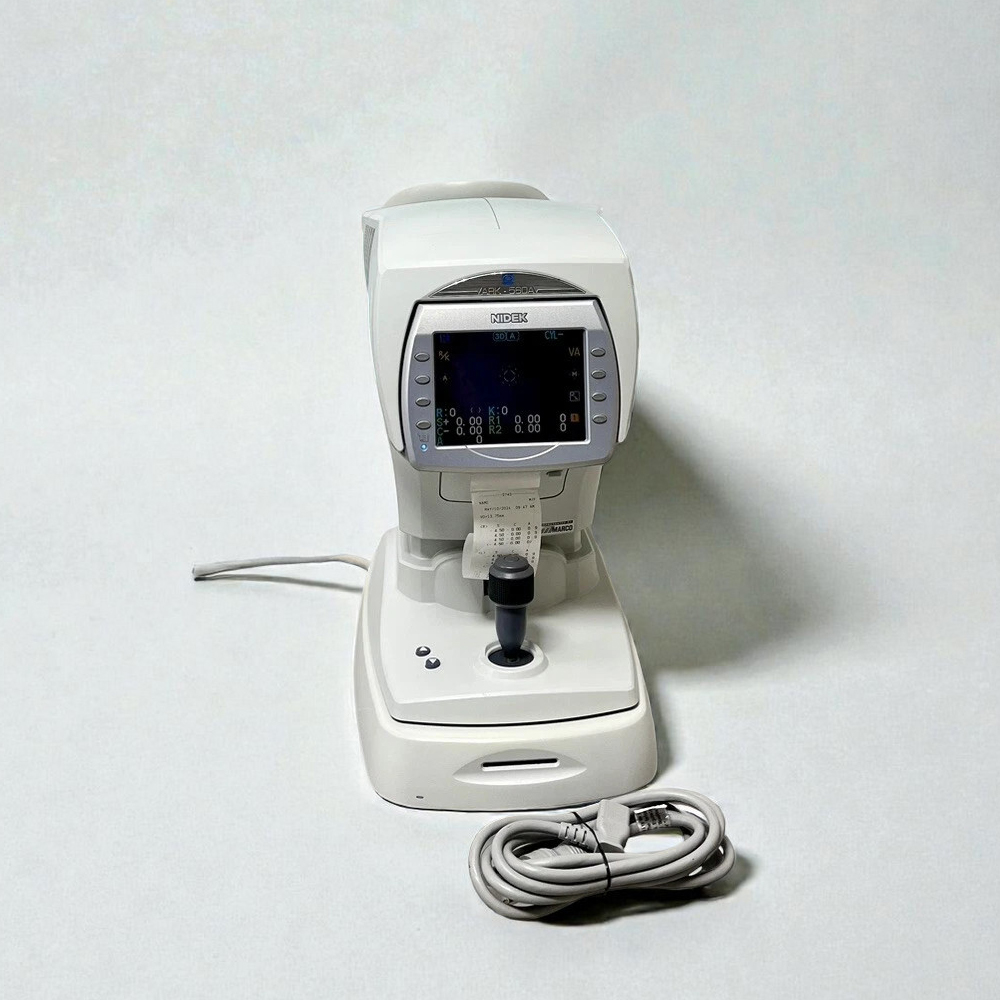
 For a small practice, used and refurbished are legitimate options — and often the smarter financial move. A new autorefractor keratometer from a primary vendor typically runs $8,000–$12,000. A properly refurbished Nidek ARK-560A or Topcon KR-8900 lands in the $4,000–$7,000 range and does the same job, measured the same way, with the same FDA clearance.
The catch: “used” and “refurbished” are not synonyms. Ask:
What specifically was inspected, and what was replaced? Were the LED sources and measurement heads tested against calibration targets? Is optical alignment verified after reassembly? What firmware version is it running, and does it still get patches? What warranty is included, and what exactly does it cover — parts, labor, both, for how long?
If a seller can’t answer those in one email, it’s not a refurbished unit. It’s a used one with a fresh coat of polish.
The Four Specs That Actually Matter
EMR connectivity — this decides whether the purchase pays for itself
If your autorefractor keratometer can’t push a result into your EMR, your tech has to type six numbers per eye for every patient. That’s 12 manual entries per exam. At 15 patients a day, that’s 180 typed numbers you’re paying someone to transcribe — and a transcription error every week or two. Before buying, confirm the unit supports your EMR’s connection type (serial, LAN, or direct plug-in) and that a driver actually exists. Every major refurbisher should be able to tell you this in one sentence.
Measurement range — only if you see complex refractions
Most older units measure spherical refractions from about −25D to +22D and astigmatism up to about 10D. That’s fine for 99% of a small-practice patient panel. If you fit specialty contacts or see a lot of post-LASIK or post-keratoplasty corneas, check that the unit handles irregular astigmatism and steep Ks (above ~50D) without choking.
Throughput and patient positioning
If you’re doing more than 20 exams a day in a single lane, exam-to-exam speed matters. Look for fast autotracking, quick head positioning, and a display the tech can read without craning. A slow unit doesn’t sound expensive until you multiply 30 extra seconds by 4,000 exams a year.
Footprint
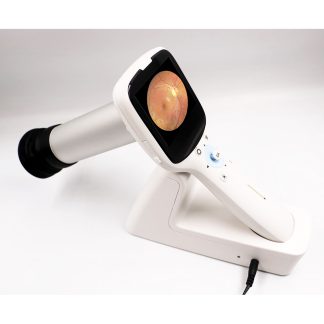
Small practices cram tonometry, fundus cameras, and an autorefractor into one pretest room. Table-mounted units with a 15″ wide base leave no room for anything else. If space is tight, look at the more compact units — or at handheld options like the Righton Retinomax if you genuinely need the flexibility.
Match the Unit to the Practice, Not the Other Way Around
A solo OD doing a few exams a day with a stable patient mix doesn’t need a topographer-combo unit. A mobile vision screening program needs a handheld — a desktop unit will sit in a box. A cataract-heavy practice referring to a surgeon benefits from a unit that pairs keratometry with a biometer or topographer. Match the purchase to your actual workflow, not the workflow you imagine once you buy better tech.
Currently in stock at Digital Eye Center
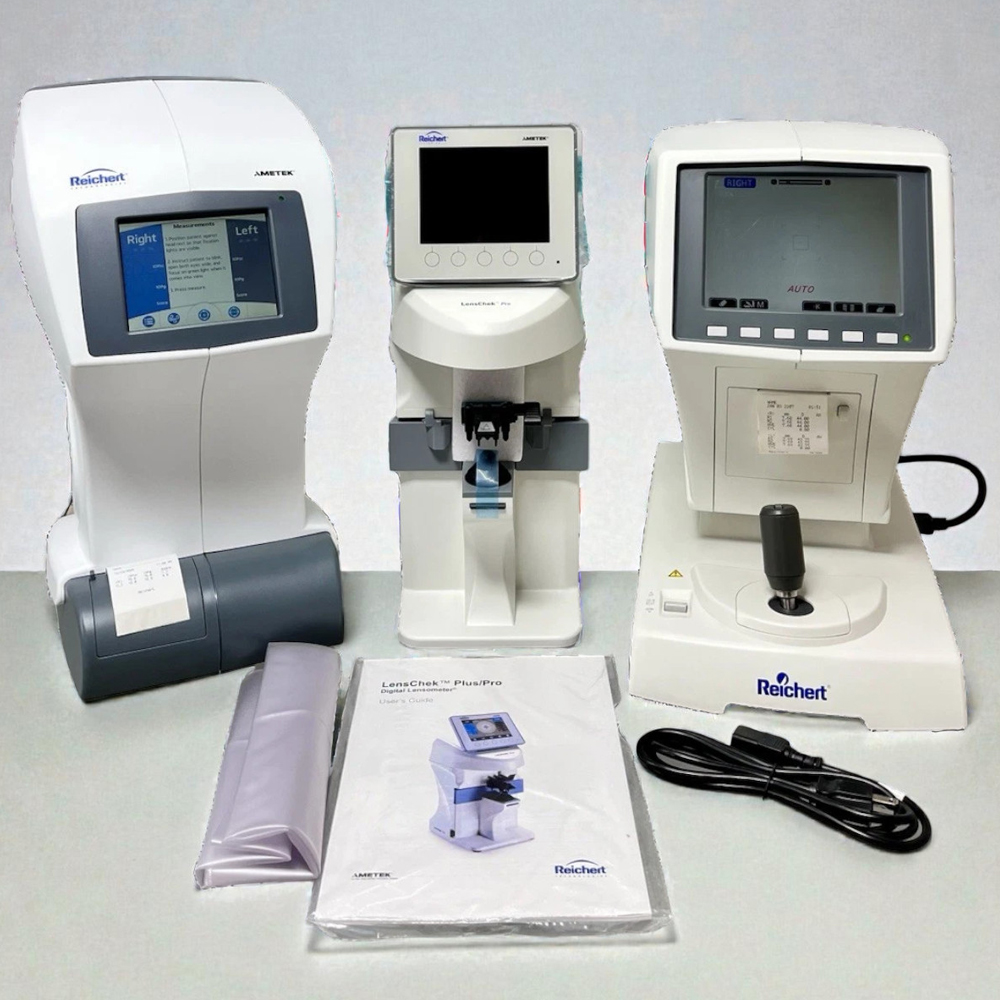 Our current autorefractor keratometer inventory includes:
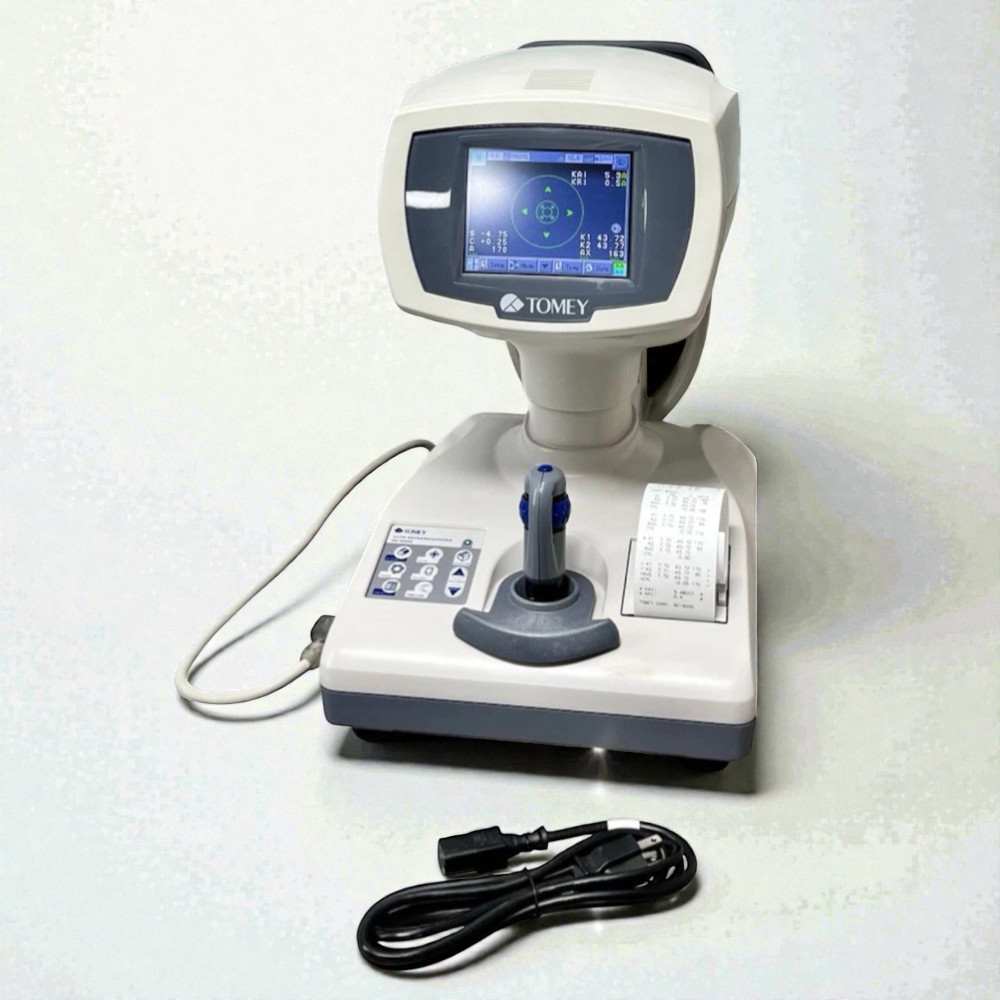
The Nidek ARK-560A — a workhorse for a standard single-lane practice, fast and reliable. The Topcon KR-8900 — compact, excellent for offices short on bench space. The Hans Heiss HRK-9900 — a brand-new option at a refurbished-unit price, with full warranty coverage. The Potec PRK 8000 — new unit, strong value for practices that want warranty and financing flexibility without a used-market risk profile.
You can browse the full autorefractor inventory here.
Every refurbished unit we sell has been inspected and verified by a certified ophthalmic equipment technician before shipping. Used units include a 90-day warranty; refurbished units carry 6 months; new units carry 1 year.
Call us at 305-771-4562 and tell us your exam volume, your EMR, and what’s already in your lane — we’ll point you to the right unit, not the most expensive one. You can also contact us here.