You’ve decided on a refurbished Zeiss Cirrus OCT and now you’re staring at a wall of model numbers — 500, 4000, 5000, 6000 — that all photograph identically and get quoted at wildly different prices. The platform name tells you almost nothing about what you’re actually buying. Here’s how the tiers separate, and which one earns its place in your lane.
Start with one question: do you need OCT angiography?
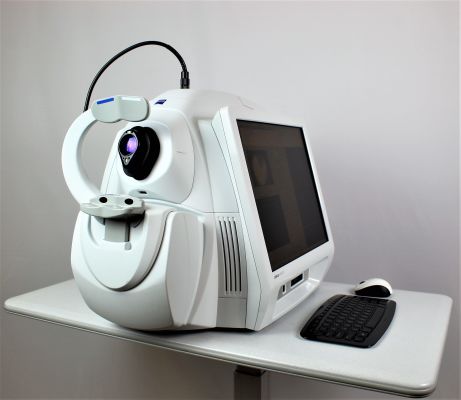 This single decision splits the whole Cirrus line in half. The entry-level Cirrus 500 is a structural OCT — RNFL and macular cube scans, ganglion cell analysis, the daily glaucoma and retina surveillance work most practices live on. It does not do AngioPlex OCT-A. The 5000 and 6000 add angiography.
If you are running routine glaucoma progression and macular thickness monitoring and you refer out the cases that need dye-free vascular imaging, a refurbished Cirrus 500 covers that workflow completely. Paying for angiography you send elsewhere is money sitting idle in the corner of the lane.
What the scan speed actually buys you
The tiers step up in A-scan rate: roughly 27,000 per second on the older 4000, 68,000 on the 5000, and 100,000 on the 6000. Speed is not a vanity spec. Faster acquisition means denser raster sampling, less motion artifact on patients who cannot hold fixation, and — on the angiography models — the ability to capture a wider single-shot OCT-A field without stitching.
For a busy clinic imaging elderly or low-vision patients, that motion tolerance is the difference between a usable scan on the first try and three repeats. If your patient mix skews toward cooperative eyes, the extra throughput matters less than it looks on the spec sheet.
Where the 5000 lands for most practices
The Cirrus 5000 is the model most refurbished buyers settle on, and for a clear reason: it adds AngioPlex OCT-A and the newer software while staying well below the 6000 on price. For a retina or comprehensive practice that wants angiography in-house without buying the top of the platform, it’s the balance point. A refurbished Cirrus 5000 gives you dye-free vascular imaging for diabetic retinopathy, vein occlusions, and AMD workups on a unit that will hold its clinical relevance for years.
Step up to the 6000 only if you specifically need the 100,000 A-scan rate and the 12×12 mm single-scan angiography field — high-volume retina imaging where the wider field genuinely changes what you document. For everyone else, that headroom is optional.
Buying refurbished: what to verify before you wire money
 A Cirrus is a computer bolted to precision optics, so the refurbishment details matter more than the model badge. Confirm the Windows version and software revision — an older OS can block license transfers and future updates. Verify that AngioPlex and any premium analysis licenses are actually included and transferable, not just “installed” on the demo. Ask whether the optics were realigned and tested after service, and what the calibration report shows.
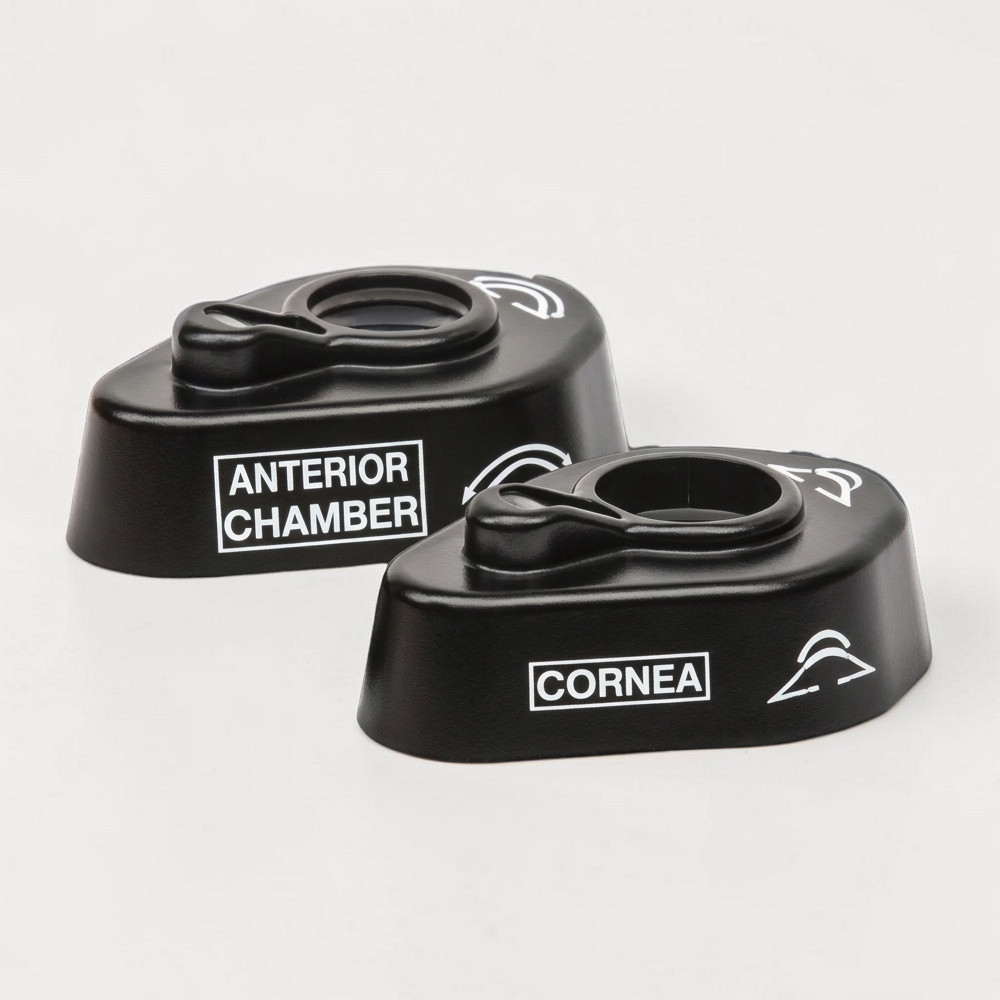
If your caseload includes anterior segment work, check whether the optional anterior segment lens kit is bundled or sold separately — it’s easy to assume it’s included and discover later that it isn’t. And get the warranty terms in writing: what’s covered, for how long, and who services it if the module fails.
Currently in stock at Digital Eye Center: the Zeiss Cirrus 500, the Zeiss Cirrus 5000, and the Cirrus 5000A with AngioPlex, plus the anterior segment lens kit.
Every refurbished OCT we sell is inspected and tested by a certified technician before it ships, with software and licenses verified and a warranty included.
Call us at 305-771-4562 and tell us what you image and how often — glaucoma surveillance, retina with angiography, or a mixed lane — and we’ll point you to the right Cirrus tier or contact us here. You can also browse our full OCT inventory.