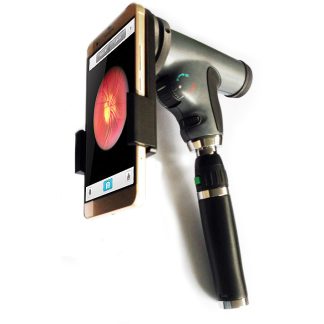
You have a patient who can’t get to the lane — sedated in the ICU, a toddler who won’t hold still, a resident in a nursing facility, someone you’re screening in the field. A table-mounted slit lamp is the gold standard, but it assumes the patient can sit up, put their chin in the rest, and stay there. When that assumption breaks, a handheld slit lamp is what actually lets you do the exam.
Where a handheld slit lamp earns its place
 The value of a portable unit isn’t that it replaces your lane instrument — it’s that it reaches the patients your lane instrument can’t. Bedside evaluations, operating rooms, emergency departments, skilled nursing facilities, and mobile clinics all share the same problem: the patient can’t come to the optics, so the optics have to come to the patient. The complexity and weight of a table-mounted unit make it impractical for infants, restless adults, and anyone who can’t be positioned upright.
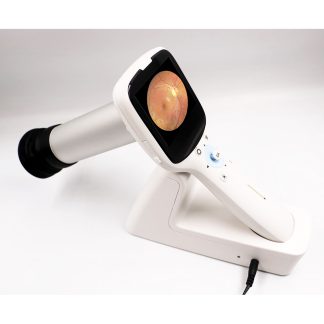
A handheld unit like the Handheld Slit Lamp S200 is built for exactly that gap. You bring anterior segment magnification to the chairside, the crib, or the gurney, and you get a real slit beam — not a penlight and a loupe — on a cornea you’d otherwise have to guess about. Published work on portable slit lamps has long documented their clinical value in settings where a conventional instrument simply isn’t an option (portable slit lamp clinical evaluation, NLM/PMC).
What you give up — and what you don’t
Stability is the real trade-off, not optics
Modern portable slit lamps deliver magnification and illumination close to a tabletop unit — commonly 10x and 16x with an adjustable beam and filters. The honest limitation isn’t image quality; it’s that you’re now the stabilizing platform. Without a chin rest and headband, small movements from you or the patient show up in the view. That’s a technique question, not a deal-breaker, and it’s why a lightweight, well-balanced body matters more on a handheld than on a lane unit.
Battery and illumination decide your day
A portable unit is only as useful as its light source when you’re away from an outlet. LED illumination runs cooler, lasts longer on a charge, and holds color temperature better than older halogen — which is why retrofitting an older portable or lane instrument with an LED conversion kit is often the cheapest upgrade that changes how a slit lamp actually performs in the field.
Handheld vs. portable-on-a-stand: pick for the patient, not the spec sheet
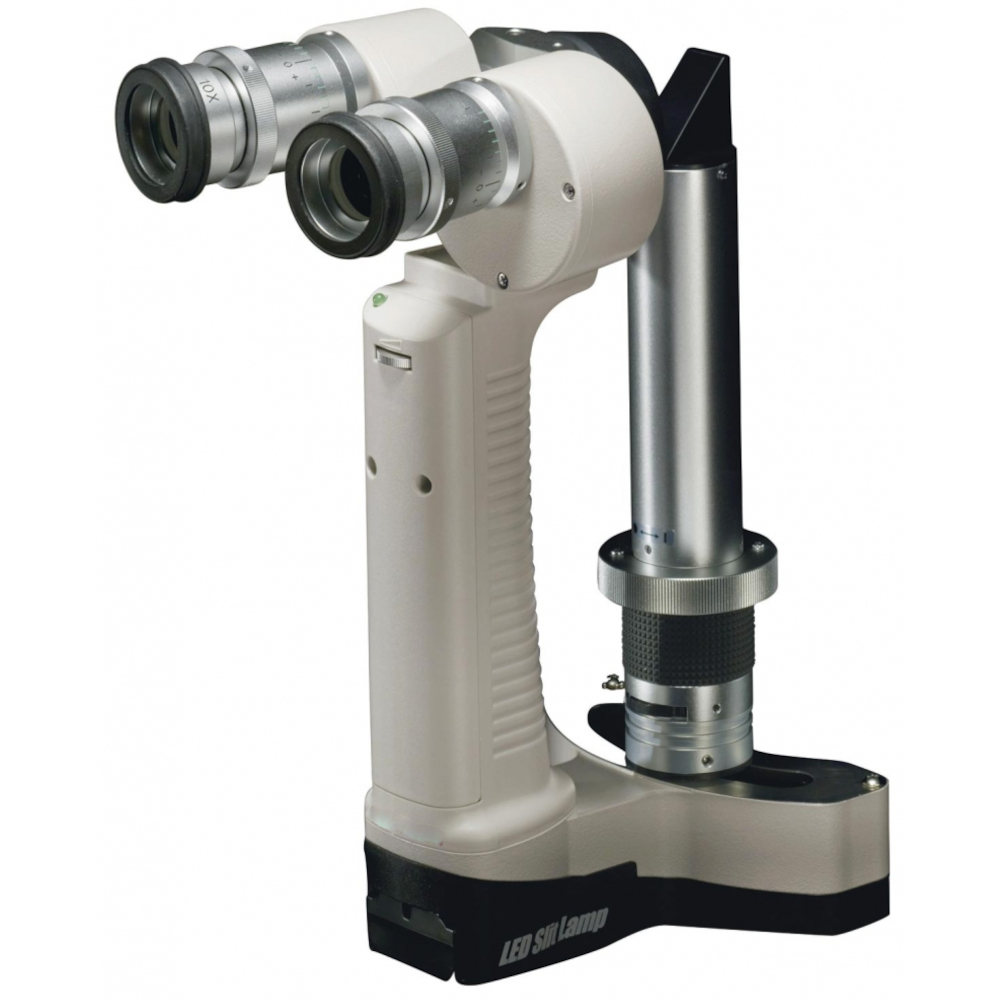 A truly handheld body wins when the exam is fast, cramped, or unpredictable — the ED, the crib, a home visit. A portable unit that mounts to a small table or the Portable Slit Lamp S2 configuration wins when you have a semi-cooperative patient and thirty seconds to brace against a surface. If most of your off-lane work is pediatric or emergency, weight and one-handed control matter most. If it’s outreach clinics with a table available, a mountable portable buys you back the stability you’d otherwise supply by hand.
What to verify before you buy a used one
Portable and handheld units take more handling than a lane instrument, so condition matters more, not less. Before you commit, confirm:
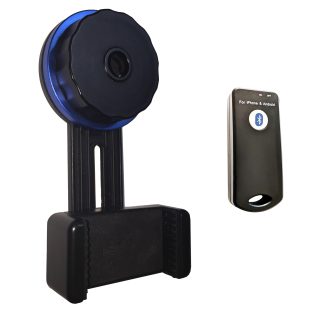
Is the slit beam sharp and even across the full width, with no dark bands? Does the magnification changer click cleanly into each position? Is the illumination LED or halogen, and if halogen, is a conversion path available? Does the battery hold a working charge, and is a spare or charger included? If you plan to document findings, can it take a smartphone or tablet adapter for imaging?
Currently in stock: the Handheld Slit Lamp S200, the Portable Slit Lamp S2, and the OptiLight LED conversion kit for older units — plus a universal adapter if you want to capture what you see.
Every portable unit we sell is inspected and tested by a certified technician before it ships from Florida, and it comes with a warranty — so the beam, the optics, and the battery are verified working before it reaches your hands.
Tell us where you’ll be using it — bedside, pediatric, ED, or outreach — and we’ll point you to the right handheld or portable configuration. Call 305-771-4562, contact us here, or browse our full portable slit lamp inventory.